
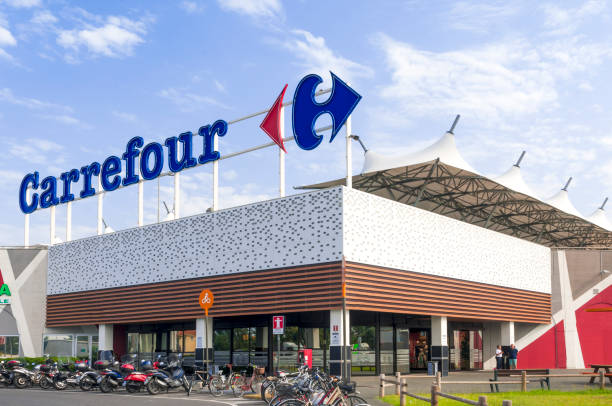
Carrefour launched its app in ChatGPT on March 26, 2026, Walmart added six features to its Sparky assistant on October 30, and Zalando unveiled “Zalando Extended” on November 3. The three announcements share one trait: a retailer’s AI assistant is becoming a place to start buying. At Carrefour, the order is paid on the retailer’s own site. For brands that sell through retailers, the question is which assistant will answer “where can I buy this product?” and with what availability data.

Key takeaways
- Carrefour (France), Walmart (United States) and Zalando (Europe) each announced an AI assistant or agent in 2026 that prepares or completes purchases.
- At Carrefour, the order is completed and paid on Carrefour.fr. Zalando plans for its agent to check out on the customer’s behalf from 2027, with a first pilot partner.
- In the conversation corpus of the Open Garden × Meikai study, 43% of the retail requests identified concern price, budget or promotions, and 12% concern availability, stores or delivery.
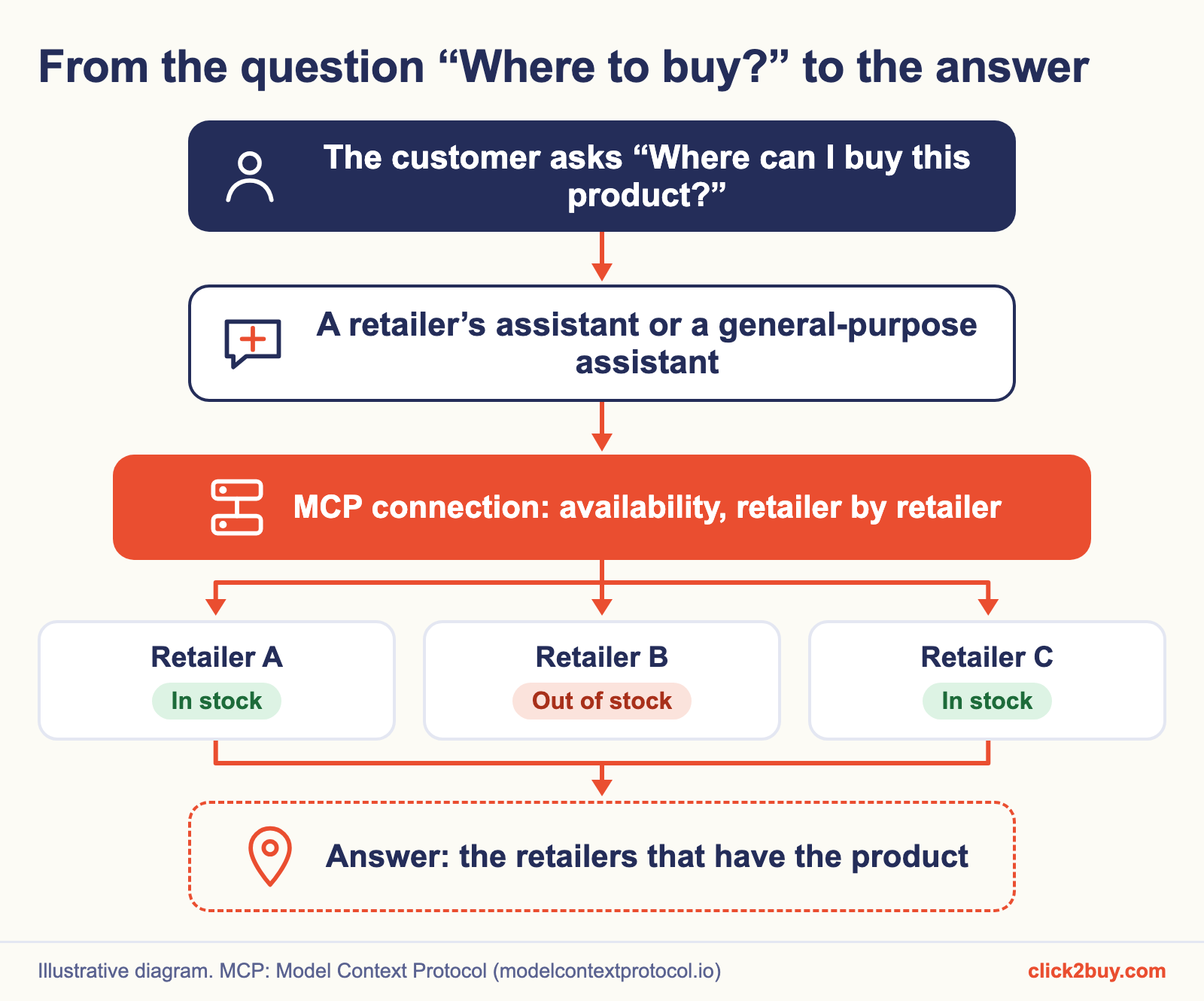
- An assistant needs reliable availability data, retailer by retailer. The MCP standard is one way to connect that data to an assistant.
Which retailers launched an AI assistant in 2026?
Carrefour announced its app in ChatGPT on March 26, 2026. Users can get recipe ideas, check a product’s availability in store, build a basket and choose a delivery method, then complete and pay for the order on Carrefour.fr, according to the French trade outlet Linéaires. The group is targeting the 26 million ChatGPT users in France. When it presented its Carrefour 2030 plan on February 18, CEO Alexandre Bompard described AI and shopping agents as a growth pillar for the group.
On October 30, Walmart announced six new features for Sparky, its shopping agent. Shoppers can upload a photo or screenshot of a problem and get suggested products, turn a handwritten list into a cart, use “Shop to Light,” get recipes with the ingredients added to the cart, ask for healthier swaps, and get replies in Spanish or French. Shop to Light locates the item on the store map, and the shopper can then make the shelf label light up with “Flash price tag.” Walmart also says Sparky can show what’s in stock at a local store.
Zalando unveiled “Zalando Extended” on November 3, with its third-quarter results. The service adds products from other online shops, which Zalando does not sell itself, to its platform. The customer stays in the app, where the group’s AI agent buys on their behalf. Westwing is the first pilot partner, and from 2027 the agent is due to check out on customers’ behalf. Zalando also says that more than 22 million unique users visited its assistant this year.
| Retailer | Announcement | What the assistant does | Where the purchase is completed |
|---|---|---|---|
| Carrefour (France) | Mar 26, 2026 | Recipes, in-store availability, basket, delivery choice, inside ChatGPT | On Carrefour.fr |
| Walmart (United States) | Oct 30, 2026 | Photo of the problem, list to cart, recipes, Shop to Light (store map, shelf label that lights up); stock at a nearby store | Not specified in the announcement |
| Zalando (Europe) | Nov 3, 2026 | Products from third-party shops, bought by the agent inside the app | In the app; agent checkout planned from 2027 for the Westwing pilot |
What does an assistant show about a product’s availability and price?
It depends on the assistant and the data it can reach. Each retailer’s assistant relies on its own data: its range, its stores, its platform and its partners. Based on the announcements we read, none is presented as covering all of a brand’s retailers.
General-purpose assistants, by contrast, choose among several retailers. The Open Garden × Meikai barometer, published by Open Garden on September 23, 2026, combines two parts: a corpus of more than 94,000 retail conversations in French, observed over twelve months, and a test of 7,500 questions drawn from real retail conversations, submitted in September 2026 to ChatGPT, Gemini, Perplexity and Copilot.
In the corpus, when the assistant itself brings up a tracked retailer, Amazon appears in 20.3% of the 2,567 answers concerned and Carrefour in 8.7%. Also in the corpus, questions about price, budget or promotions make up 43% of the retail requests identified, and availability, stores and delivery 12%. Availability comes up less often than price, but the answer affects whether the shopper can buy the product. In the test, 49.3% of the links cited point to media and editorial content, 19.9% to retailer sites and 10.1% to brand sites.
The study measures presence in the text, not the effect on clicks or sales, and does not say whether the answers show accurate prices or stock. Its two parts (the observed corpus and the test) cannot be compared directly, it covers French-language retail conversations, and it measures what assistants write, not what customers buy.
Why does the “where to buy?” question matter more in an assistant?
In a conversation, the answer fits in a few lines and the customer sees fewer options than in a list of search results. For a brand, what matters is being pointed to a retailer that really has the product.
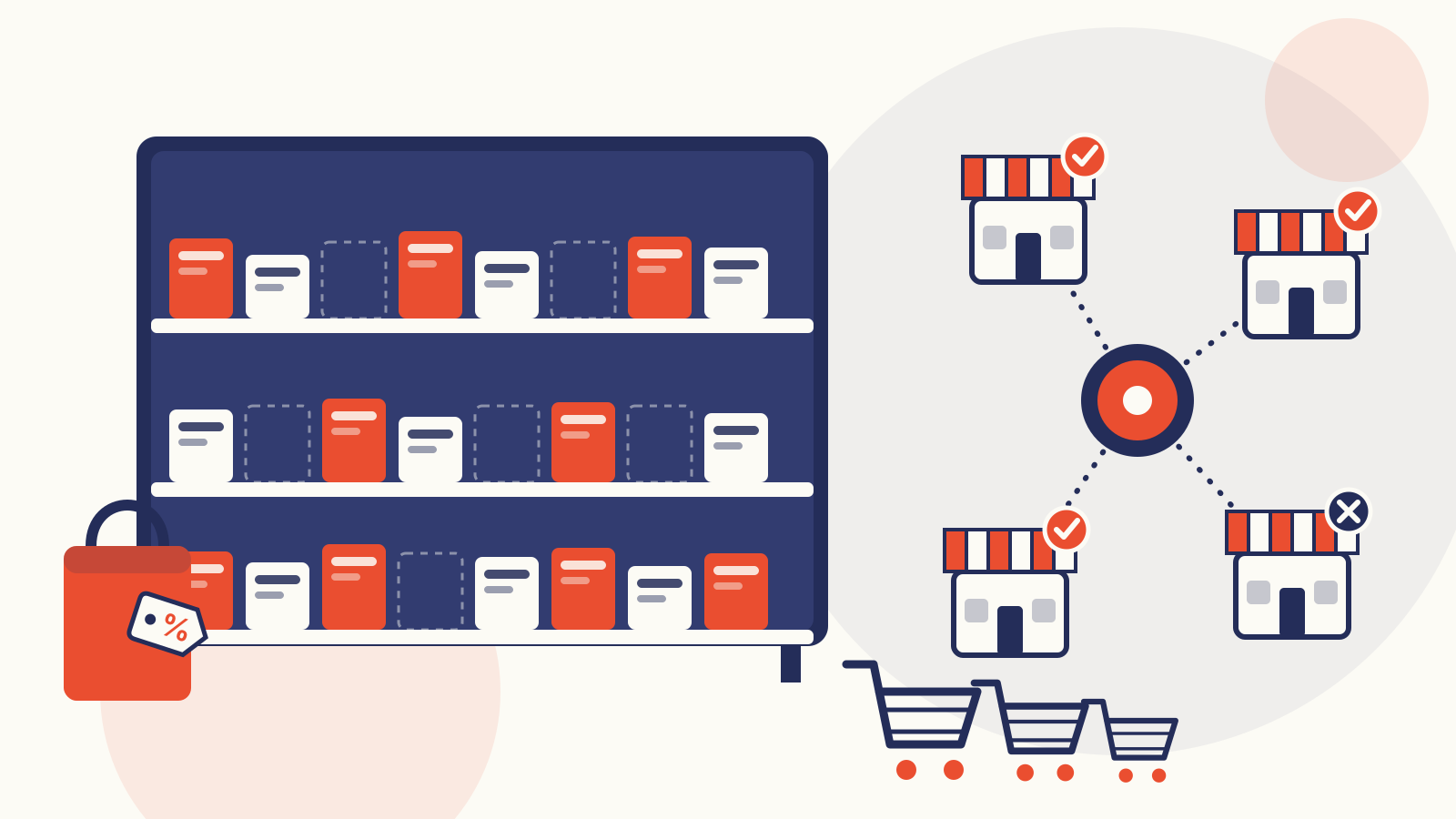
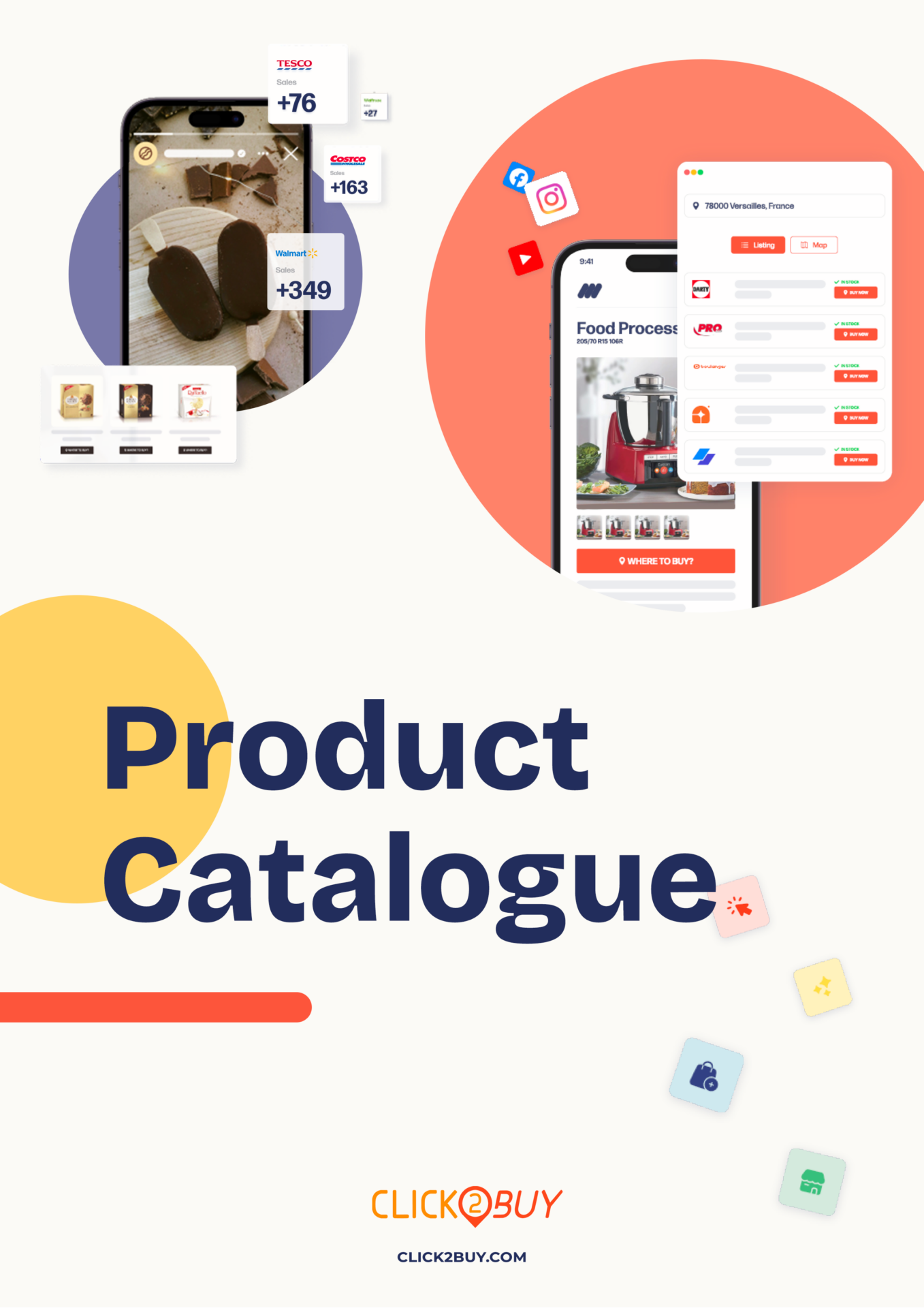
That is the role of a where-to-buy tool: it shows, for a brand, the retailers that have its products in stock. When the purchase goes through an assistant, this guidance carries more weight, because the answer is short and immediate. The same data (which retailers have the product in stock), which is used on the brand’s own site, can be passed on to assistants, which is what the MCP described below allows. Click2Buy, which publishes this article, develops a where-to-buy solution and an MCP; this reading is ours, not that of the platforms cited.
How does an assistant get reliable availability data?
The problem is mainly technical. The information lives with each retailer, in different formats, and it changes often. To answer correctly, an assistant has to query that data at the time of the question, retailer by retailer, rather than rely on a listing copied a few days earlier. In a previous article, AI assistants and product availability: sources and freshness, we detailed where assistants’ stock information comes from today.
This is where MCP, the Model Context Protocol, comes in. Its official documentation defines it as “an open-source standard for connecting AI applications to external systems”: data sources such as local files or databases, tools such as search engines, and workflows. It compares MCP to a USB-C port for AI applications and cites applications such as Claude and ChatGPT among those that can connect to it. In practice, a retailer, a brand or a software vendor can expose its data through an MCP server, and a compatible assistant can query it without a custom integration.
Click2Buy offers an MCP that lets a chatbot or shopping assistant show where to buy a product and its stock by retailer, without leaving the conversation.
What can brands do right now?
- Test the assistants yourself with a fixed list of questions (“where can I buy [product]?”), dated and repeated regularly, as the Open Garden study does at scale.
- Check that your product listings, references and availability are consistent at each retailer.
- Keep the “Where to Buy” page on your site up to date, showing the retailers that have the product in stock.
- Look into existing MCP connections, so that an assistant can query availability data rather than infer it.
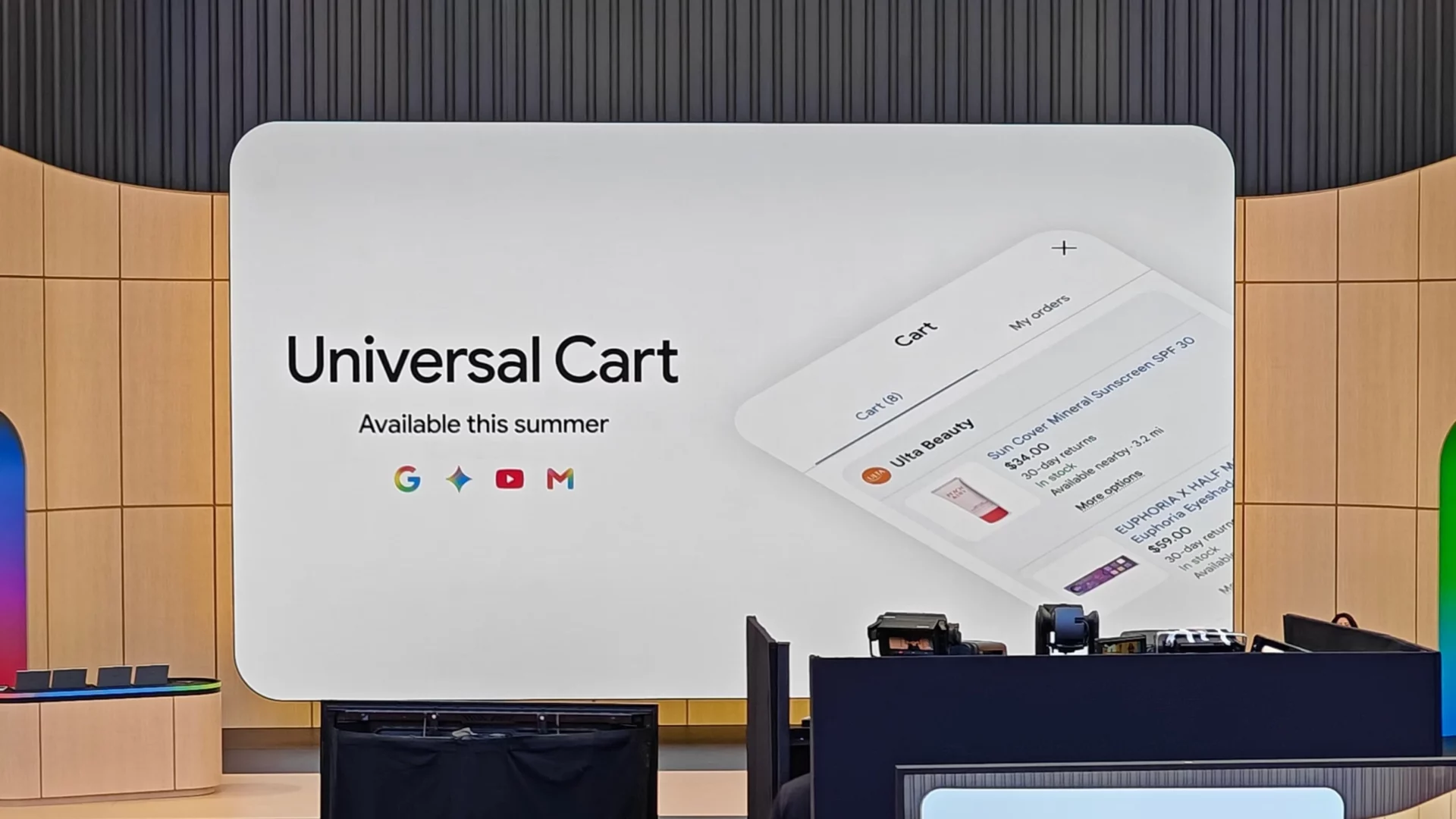
To go further on how fresh stock information is, see our article on sources and stock freshness. For how commerce is changing inside Google, see Google Universal Cart. The article “Agentic commerce: why where-to-buy is becoming decisive” details the role of Where to Buy in the face of shopping agents.
The Click2Buy MCP
Connected to Where to Buy, it gives the assistants that connect to it access to products and stock levels by retailer.
Frequently asked questions
Can you buy directly in ChatGPT from Carrefour?
Not entirely. Since the March 26, 2026 announcement, the Carrefour app in ChatGPT lets users get recipe ideas, check a product’s availability in store, build a basket and choose a delivery method. The order is then completed and paid on Carrefour.fr, according to Linéaires.
What is MCP (Model Context Protocol)?
MCP is an open-source standard for connecting AI applications, such as assistants, to external systems: databases, tools or workflows. Its official documentation compares it to a USB-C port for AI applications: a standardized way to connect data sources to an assistant.
How does an assistant know where a product is available?
It depends on the assistant. A retailer’s assistant relies on the retailer’s data: the Carrefour app in ChatGPT, for example, lets users check a product’s availability in store. To reach external data, an assistant can use an MCP-type connection, which lets it query a data source. How fresh the information is depends on the source.
What is Zalando Extended?
Zalando Extended adds products sold by other online shops to the Zalando platform. According to the November 3, 2026 press release, the customer stays in the Zalando app, where the group’s AI agent can buy these products for them. Westwing is the first pilot partner, with agent checkout planned from 2027.
Sources
- Linéaires, “Carrefour : les clients peuvent faire leurs courses sur ChatGPT” (in French), March 26, 2026
- Walmart, “Sparky Makes Holiday Magic Real,” October 30, 2026
- Zalando, Q3 2026 results press release (distributed by EQS), November 3, 2026
- Open Garden × Meikai, “Les retailers dans les assistants IA : 5 enseignements du baromètre” (in French), September 23, 2026
- Model Context Protocol, “What is the Model Context Protocol (MCP)?”, official documentation

Hugo Cocquempot, Marketing at Click2Buy
“Retailers have taken the lead: their assistants already answer the question ‘where to buy?’. For a brand, the priority now is to be present in these conversations, with reliable availability data, on its own site as well as in assistants.”