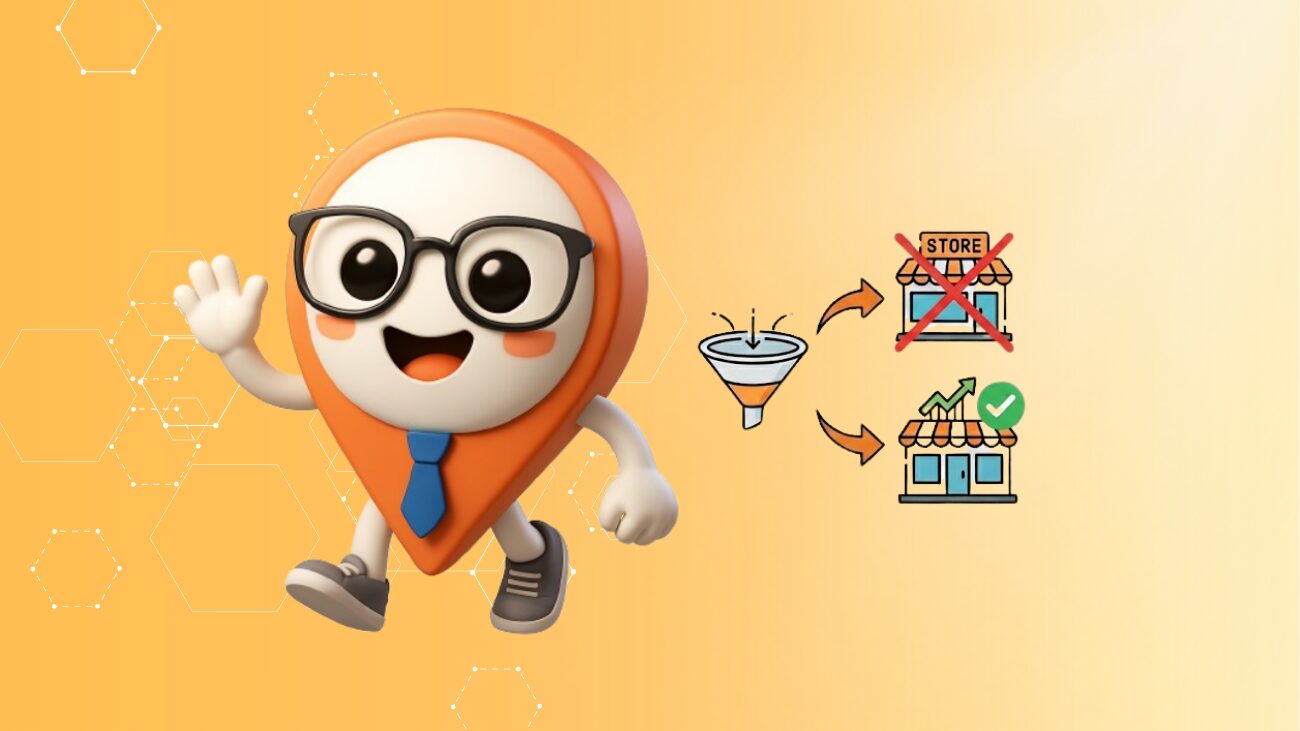
A drive-to-store campaign that doesn’t convert is rarely a budget problem. It’s almost always a chain problem. Somewhere between the ad impression and the in-store visit, something breaks. And in most cases, no one knows exactly where. Let’s fix that.
Why drive-to-store is more fragile than it looks
On paper, it’s simple: run an ad, bring shoppers to the store. In reality, the journey is full of micro-frictions. Targeting that’s too broad, an unclear offer, no stock on shelf, and the entire campaign goes up in smoke. The worst part is that surface metrics like impressions, clicks, and reach can look great while drive-to-store conversion silently collapses.
Here are the 12 most common causes, the ones we keep seeing again and again in the field.
The 12 causes that block conversion
- Geographic targeting that’s too broad – Reaching people 40 km away from a store is wasted budget. The right radius depends on the product and category, but in most cases, beyond 15 km, willingness to travel drops sharply.
- A message disconnected from the local context – A national creative with no local adaptation generates limited engagement. Shoppers want to know whether the product is available near them, not just that the brand exists.
- No mention of the point of sale – Not naming the retailer in the ad forces shoppers to make the connection themselves. Many won’t.
- A promotional offer that isn’t distinctive enough – “Minus 5 percent” on a 12 euro product won’t move people. The offer must justify the trip. If it doesn’t, the click stays a click.
- Poor timing – Running ads on weekdays for purchases that happen on weekends, or promoting when stores are closed, destroys real-time relevance.
- Unanticipated out-of-stocks – This is the most underestimated cause. The shopper is convinced, makes the trip, and the product isn’t there. Not only is the visit lost, trust is lost too.
- A landing page that doesn’t send users to the right retailer – Sending shoppers to the brand homepage instead of a clear where-to-buy destination adds unnecessary friction right before conversion.
- No actionable performance data – If you don’t know which channels actually drive visits, you optimize blindly. You cut what works and keep what doesn’t.
- A gap between the digital promise and the in-store experience – The ad promises an exclusive deal, but the shelf doesn’t highlight it. The disconnect between digital and in-store reality is often underestimated.
- Retail partners not being valued on brand touchpoints – If retailers don’t see qualified traffic coming from the brand, they invest less in featuring the product. It becomes a vicious circle.
- Lack of consistency across channels – Social ads say one thing, a newsletter says another, and the brand site says nothing. Shoppers get lost or give up.
- Inability to measure real impact – Without clear attribution between campaign and visit, it’s impossible to measure real impact and justify budgets internally. Local marketing becomes a cost line, not a performance lever.
What changes when you fix these issues
Fixing these 12 causes doesn’t require rebuilding everything. In most cases, three or four targeted adjustments are enough to significantly increase the in-store conversion rate. The key is knowing which ones to tackle first, and for that, you need data.
A table to quickly map each blocker to its correction lever:
| Cause | Blocker type | Correction lever |
|---|---|---|
| Geographic targeting too broad | Technical | Reduce radius, segment by catchment area |
| Message without local anchoring | Creative | Personalize by retailer or area |
| No mention of the point of sale | Creative | Include the retailer name in the ad |
| Offer not distinctive enough | Strategic | Test in-store exclusive offers |
| Poor timing | Technical | Align delivery with store hours and buying moments |
| Out-of-stocks | Operational | Monitor availability in real time, redirect if out-of-stock |
| Landing page not optimized | Technical | Redirect to a conversion-oriented landing experience |
| No performance data | Analytics | Set up channel-by-channel tracking |
| Gap between promise and in-store experience | Operational | Align brand and field teams before launch |
| Retail partners not valued | Relational | Integrate partners into brand materials |
| Inconsistency across channels | Strategic | Unify messaging across all touchpoints |
| No impact measurement | Analytics | Build dedicated drive-to-store reporting |
The most expensive mistake: optimizing without data
You can tighten targeting, improve creatives, refine the offer and still miss if you don’t know what truly triggered the visit. The real drive-to-store problem is often less about the campaign and more about the inability to read what it produces. Without reliable attribution, you go in circles.
The brands that improve fastest treat every digital touchpoint site, campaigns, social, newsletters as a measurable lever, not a storefront. Every click toward a retailer should be trackable, qualifiable, and analyzable.
Do: Before launching a drive-to-store campaign, confirm product availability at the targeted retailers. Automatic redirection to an alternative when a product is out-of-stock can save conversion.
Avoid: Launching a campaign without defining upfront how you will measure generated visits. “We’ll see if sales go up” is not an attribution method. It’s announced budget waste.
What we recommend in practice
There’s no universal recipe. But one principle holds in most cases: audit your conversion chain before increasing budgets. Double down on a campaign that breaks at the landing step, and you double the waste.
Next, treat your relationship with retail partners as a lever in its own right. A retailer receiving qualified traffic from your brand touchpoints has every reason to feature your product better. That’s not diplomacy, it’s commercial mechanics.
Finally, stop separating digital performance from in-store performance. They are two sides of the same outcome. Shoppers don’t make that distinction.
Why do your drive-to-store campaigns attract clicks but not in-store customers?
Because between the ad and the store visit, there are dozens of invisible friction points: targeting that’s too broad, an unconvincing message, an unclear offer, or a disappointing in-store experience. Fixing these blockers one by one is exactly what turns a campaign that “runs” into a campaign that truly converts.
How can you identify what blocks conversion in a drive-to-store strategy?
By analyzing every step of the journey, from ad exposure to store entry. The most common blockers hide in geographic targeting, message relevance, offer clarity, and the consistency between the digital promise and the in-store reality. A methodical audit of these 12 causes quickly reveals where conversion is being lost.
How many issues can make a drive-to-store campaign fail?
At least 12, and they’re not always where you expect. Some are technical, like an overly large radius or poor delivery timing. Others are more subtle, like an offer that doesn’t stand out or a lack of consistency between the online message and the in-store welcome. The good news is that each of these issues has a concrete, actionable fix.
12 reviews

Maxence Antao, Communications Officer at Click2Buy
“Our role at Click2Buy: guide our customers throughout the purchase journey and optimize their marketing ROI with real-time retailer stock data.”