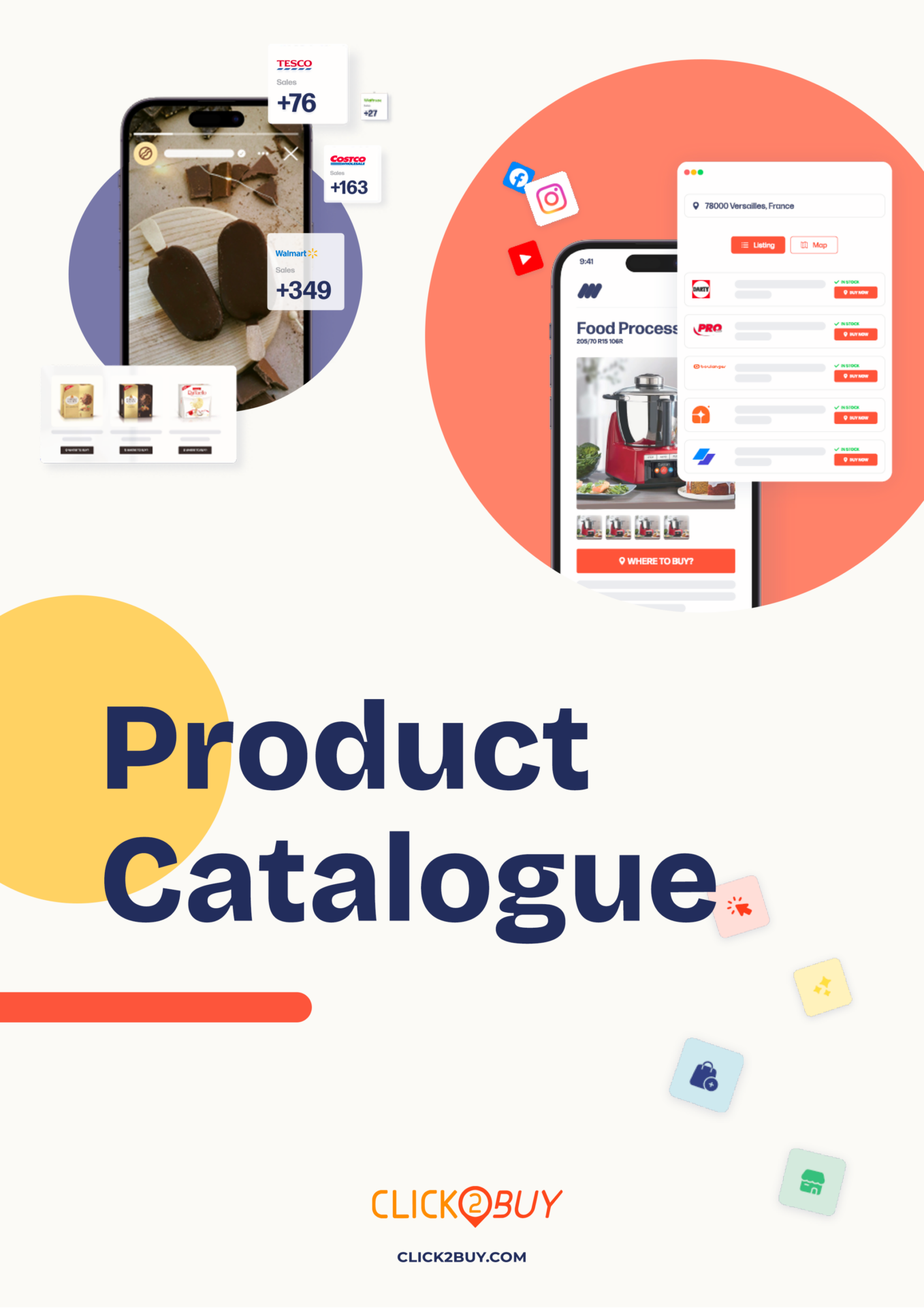

Comparing MikMak and Click2Buy comes down to one simple question: what truly converts a shopper? A shoppable format? A link to a retailer? A buy now button? Or a complete journey that guides the user to the right product, at the right retailer, supported by the right data? Both platforms address similar challenges, but they should not be assessed only on their ability to generate a click. In modern retail, shopper conversion depends mainly on what happens after exposure.
Key takeaway
MikMak and Click2Buy can both help brands connect their digital touchpoints with retailers. But assessing real shopper conversion requires looking beyond the click: availability, redirection, retailer quality, analytics, purchase intent and the ability to optimize the journey.
In practice, the confusion often comes from an oversimplification. A brand launches a campaign, adds a shoppable mechanism, displays retailers and measures click-outs. That is a start, but it is not proof of conversion. A shopper can click without buying. They may land on an overly broad page. They may find that the product is unavailable. They may choose an irrelevant retailer. They may also show strong intent that the brand does not know how to use. This is where the MikMak vs Click2Buy comparison becomes relevant.
What MikMak brings to the shopper journey
MikMak is often associated with shoppable media, commerce intelligence and digital retail activation. For a brand looking to make campaigns more transactional, shorten the journey between content and retailer or analyze selected ecommerce signals, this approach can make sense.
The strength of this type of platform is clear: it follows an activation-driven model. Marketing touchpoints become more actionable. An ad, video, landing page or social media asset can move the user closer to a purchase destination. This is useful, especially when brands want to move beyond a purely brand-focused approach. This related analysis explores the limits of that model in greater detail.
But the more demanding question is what actually gets measured after activation. Does the platform help the brand understand the quality of intent, or only the volume of interactions? This is often where the difference between a shoppable mechanism and a true shopper marketing platform becomes clear.
What Click2Buy brings to Where-to-Buy
Click2Buy operates at a very practical stage of the journey: the moment when the consumer wants to know where to buy. The platform connects a brand’s digital touchpoints with relevant online or physical retailers through availability, redirection and purchase intent measurement.
Click2Buy does not simply display retailer logos. It helps guide shoppers toward the right purchase options, strengthen retail partnerships and collect useful data, including the product viewed, retailer selected, source channel, campaign, market and engagement level.
For a brand using indirect distribution, this visibility is essential. The brand does not always control the final transaction at the retailer. It therefore needs strong intermediate signals to understand whether campaigns and product pages are creating genuine purchase intent.
The key difference: activation or performance management
The difference between MikMak and Click2Buy should not be oversimplified. Both solutions can address related needs, but they do not always focus on the same part of the journey. MikMak often appeals to brands that want to make activations more shoppable. Click2Buy is more relevant to brands that want to manage a complete Where-to-Buy journey, from the website or campaign to the selected retailer.
In practical terms, a shoppable media solution can be relevant when the priority is activating a media format. When the priority is understanding where intent goes, which retailers capture demand and how to optimize indirect sales, the depth of the journey and analytics becomes more important. A similar comparison shows why connecting media and retail requires more than a simple outbound link.
| Criterion | MikMak | Click2Buy |
|---|---|---|
| Entry point | Shoppable media and commerce activation | Where-to-Buy, availability and the retailer journey |
| Primary objective | Make content more transactional | Guide and measure intent toward retailers |
| Business insight | Activation performance and shopper interactions | Products, retailers, campaigns, channels and intent |
| Most natural use case | Shoppable campaigns and commerce media | Drive-to-retail, indirect sales and omnichannel management |
Why availability changes conversion
A shopper does not convert simply because they clicked. They convert because the product is easy to find, available, correctly linked and aligned with their intent. This is basic, but it is still too often overlooked. A campaign can generate strong engagement and lose the sale immediately afterwards if the retailer does not stock the product, the URL leads to a generic page or the mobile journey performs poorly.
This is why retailer redirection should not be treated as a simple outbound link. It must be managed. The user should reach the right destination with as little friction as possible. Otherwise, the brand funds purchase intent that the journey fails to convert effectively.
Product availability therefore becomes a conversion criterion that is just as important as the media creative. In some existing setups, older Where-to-Buy systems struggle to provide this level of reliability.
Why analytics make the difference
The decisive criterion is ultimately the data. A platform can generate traffic without providing useful enough insight. Marketing teams no longer want to know only how many users clicked. They want to know which products attract interest, which retailers shoppers select, which channels generate intent and which campaigns create value.
This is where Where-to-Buy analytics change the perspective. They allow brands to move from activity tracking to performance management. A brand can identify what works, correct what blocks conversion and prioritize its efforts with retail partners.
Purchase intent measurement provides a more detailed view than a basic click-out rate.
What to compare before choosing
The right choice should not be based on a generic feature grid. It should be based on your real use cases: your products, retailers, markets, campaigns and data constraints. A single-market FMCG brand running a few shoppable campaigns does not have the same needs as an international brand working with multiple retailers and seeking to measure indirect sales.
- Check retailer coverage in your key markets
- Test the quality of product redirections
- Review availability and alternatives for out-of-stock products
- Analyze the data collected after the click
- Assess the support provided for continuous optimization
Within this framework, Click2Buy becomes particularly relevant for brands that want to move beyond one-off activations. The platform can turn every digital touchpoint into a measurable sales driver for retail partners while maintaining a clear view of the journey.
Our practical recommendation
If your primary need is to make campaigns shoppable, MikMak may belong on your shortlist. If your priority is building a robust Where-to-Buy journey connected to availability, retailers and intent measurement, Click2Buy deserves closer consideration.
There is no universal answer to the question of which platform truly converts shoppers. A platform converts more effectively when it matches the brand’s distribution model. For a brand selling through retailers, conversion is not won through media alone. It is won through the quality of the transition between interest, retailer selection and purchase action.
This is where the real difference lies: a strong platform should not simply activate the shopper. It should help the brand understand, guide and improve the journey that turns intent into retail value.
Why compare MikMak and Click2Buy?
Both solutions connect brands with retailers, but they take different approaches. MikMak emphasizes commerce intelligence, shoppable media and orchestration, while Click2Buy focuses on Where-to-Buy, stock availability and retail journey measurement.
How can a brand determine which platform converts shoppers more effectively?
Compare redirection quality, product availability, retailer coverage, collected data, purchase intent measurement and the ability to optimize performance after the click.
How many criteria should a brand compare before choosing?
Five criteria are enough to frame the decision: activation, availability, redirection, analytics and operational support.
8 reviews

Maxence Antao, Communications Officer at Click2Buy
Our role at Click2Buy is to guide clients throughout the purchase journey and optimize their marketing ROI using real-time retailer stock data.