Every year, new price monitoring tools appear on the market. And every year, the same questions come back: which one should you choose? Are they really that different? Why do some brands switch after just six months? This 2026 comparison does not claim to be exhaustive. It aims to be honest about what these tools do well, what they do not do well, and how to choose based on your actual context.
Do you manage fewer than 500 SKUs across a few national retailers? Start with an entry level tool such as Prisync or Price2Spy.
Do you have a broad distribution network, need frequent updates, and face complex pricing issues? Look at Minderest, Netrivals, or an integrated solution like Click2Buy that combines price monitoring with product presence data.
Do you want to monitor prices and manage product availability across your distributors? A platform that connects both dimensions will save you time and make your analysis more consistent.
What price monitoring tools have in common and why that is not enough
Most competitive intelligence tools rely on the same basic mechanism: automated price scraping, a visualization interface, and alerts when price gaps appear. That is useful. But this common foundation hides major differences in collection frequency, geographic coverage, promotion and bundle handling, and the reliability of the data collected.
A tool that scrapes once a day will not help you react to a price war unfolding within a few hours. A tool that covers 50 sites but not your 3 main retailers is useless. Before comparing solution prices, compare what they actually do in your context. That is the first filter.
The main tools on the market in 2026
The market has consolidated around a few well positioned players, with different approaches depending on the target customer and the level of sophistication required. Here is an overview of the solutions most commonly used by brands selling through indirect distribution.
- Prisync: an accessible solution, well suited to small and mid sized businesses. Clear interface, fast setup, pricing based on the number of tracked products. Limitation: international coverage can be improved and advanced integration options are limited.
- Price2Spy: a similar positioning to Prisync, with solid retailer coverage in e-commerce. Mostly used for competitor price benchmarking on large catalogs.
- Minderest: a more robust solution designed for pricing teams that need frequent data updates and deeper analysis. Strong international coverage, but longer onboarding.
- Netrivals: strong in pure e-commerce, with interesting automatic repricing features for businesses selling direct.
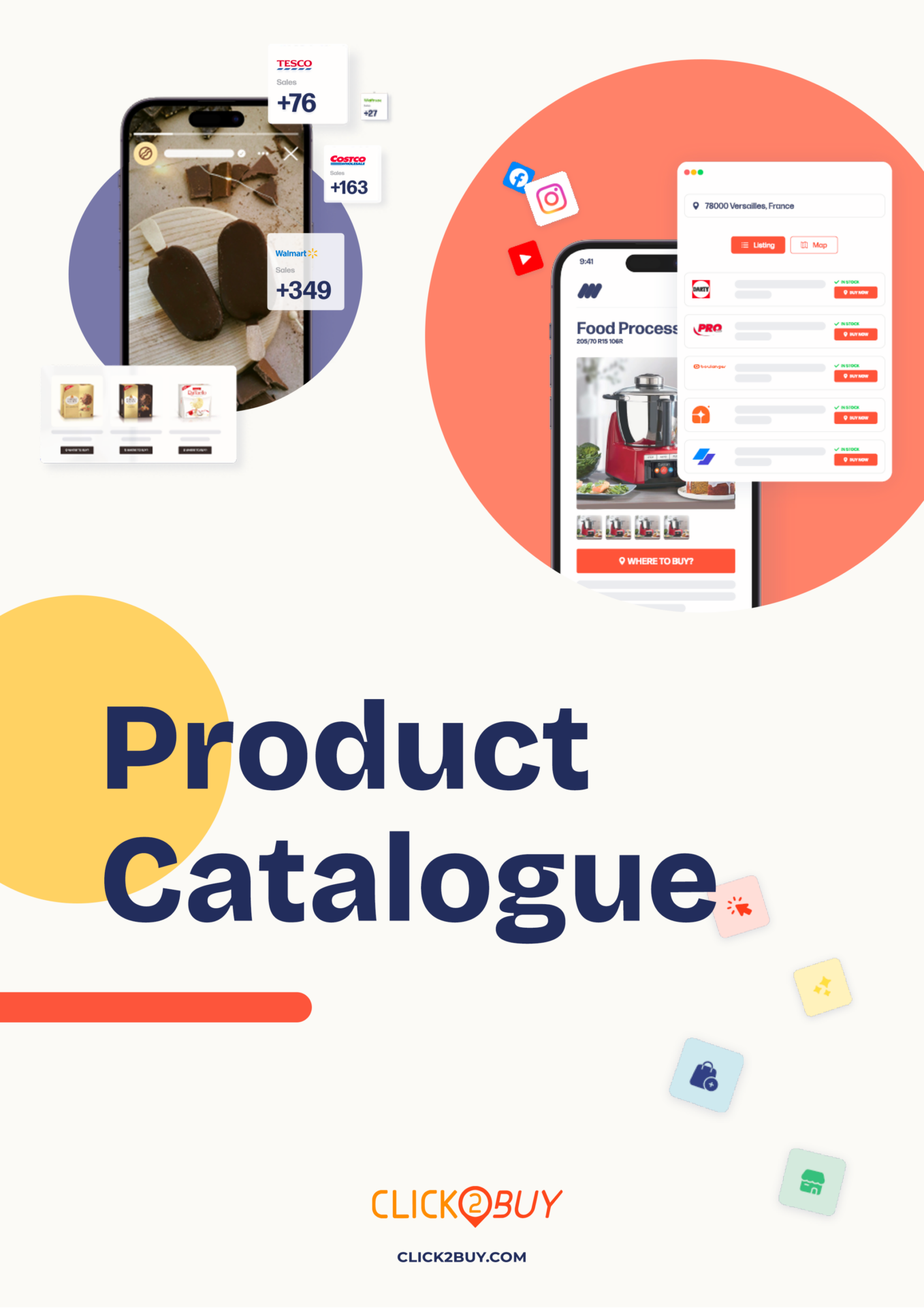
- Click2Buy: a different approach. Price monitoring is part of a broader vision that also includes product availability, distributor presence, and campaign impact measurement. Relevant for brands that want to connect price data with retail performance data.
For brands hesitating between Prisync and a more suitable alternative for their structure, you can read more here.
Tool comparison what really differentiates the solutions
| Tool | Main target | Collection frequency | Retailer coverage | Main strength | Limitation |
|---|---|---|---|---|---|
| Prisync | Small and mid sized businesses | Daily | National | Simplicity, affordable pricing | Limited integrations |
| Price2Spy | Small and mid sized businesses | Daily | National to international | Large site catalog | Aging interface |
| Minderest | Large enterprises | Real time or high frequency | International | Reliable and frequent data | Long onboarding, high cost |
| Netrivals | E-commerce players | High frequency | European | Automatic repricing | Less suited to indirect distribution |
| Click2Buy | Brands selling through indirect distribution | Continuous | Customizable multi retailer coverage | Price monitoring plus product presence plus campaign performance | Broader scope than price monitoring alone |
What standard comparisons do not tell you
Most comparisons stop at features. What they do not evaluate is the real quality of scraped data, the error rate on collected prices, or how the tools handle complex cases such as strikethrough pricing, bundles, or location based prices. That is where the tools truly differ.
There is also a significant difference in how tools handle out of stock situations. Some continue to report a price even when the product is unavailable, which distorts the analysis. A good price intelligence tool must connect availability status and price level to provide an accurate market view. This is also why this topic matters so much.
The selection criteria that really matter
Beyond the features listed in brochures, here is what you should actually assess before signing:
- The real coverage of your priority retailers. Ask for a demo on your own products, not generic examples.
- The update frequency that fits your sector. If your competitors change prices several times a day, daily collection is not enough.
- The ability to detect promotions and strikethrough prices. A displayed price is not always the real paid price.
- Alert options and integration with your existing management tools.
- The level of support and onboarding, especially if you do not have a dedicated pricing team.
For brands already using a where to buy solution and wanting to connect price tracking with broader performance measurement, this article gives a useful framework so you do not manage in silos.
How do you choose the right price monitoring tool in 2026?
It all depends on your context. A small business tracking one hundred products across a few distributors does not need the same tool as a large company monitoring thousands of SKUs across dozens of retailers. The key criteria are site coverage, price update frequency, alert quality, and integration with your existing tools. Before comparing tool prices, compare what they actually do.
Why do price monitoring tools not all give the same results?
Because they do not collect data the same way. Some scrape in real time, others in daily batches. Some cover thousands of sites, others focus on major retailers. And how they handle regional price differences, promotions, or bundles changes everything. Two tools can monitor the same product on the same retailer and report different prices. It is not a bug, it is a methodology issue.
How much does a competitive price monitoring tool cost in 2026?
Price ranges are wide. Entry level solutions for small businesses can start at 50 to 100 euros per month, while enterprise platforms with international coverage and real time updates can cost several thousand euros monthly. Most vendors price based on the number of monitored SKUs and covered sites. Watch out for hidden costs such as integrations, onboarding, and dedicated support.
19 reviews

Maxence Antao, Communications Manager at Click2Buy
“Our role at Click2Buy is to guide our clients throughout the buying journey and optimize their marketing ROI thanks to real time retailer stock data.”