Comparing Swaven and Click2Buy for drive-to-store can quickly become confusing if every solution is placed in the same category. Both approaches involve retail, digital activation and redirection toward distributors. But the real issue is not only sending a consumer to a point of sale. It is determining whether the platform helps the brand manage the buying journey, understand intent, highlight its retailers and measure the real impact of its campaigns. For a CPG brand, this is often where the difference lies.
Good practice
Compare Swaven and Click2Buy based on your actual use cases: shoppable campaigns, product pages, retailer coverage, availability, analytics and multi-country management.
What to avoid
Do not choose a drive-to-store platform simply because it displays distributors. What matters is what you can measure, optimize and defend from a business perspective.
In practice, the question often arises when a brand wants to connect its digital assets more effectively with its retail network. The brand website generates traffic. Campaigns create attention. Newsletters, social networks and media activate audiences. But if consumers do not clearly know where to buy, the journey becomes weaker. This is precisely the role of a drive-to-store platform: turning digital intent into action toward a relevant distributor.
What brands really expect from drive-to-store
Drive-to-store was long reduced to a simple promise: sending traffic toward stores or retailers. That is useful, but too limited. Today, brands mainly want to understand what happens between exposure and potential purchase. Which product triggers intent? Which retailer is selected? Which campaign generates the most qualified exits? Which market is underperforming? Which data can improve the journey?
This is where where-to-buy drive-to-store takes on a more strategic role. The objective is no longer simply to push users toward a point of sale. It is to orchestrate the right journey based on the product, country, channel, availability level and available retail partners.
If the platform does not provide this reading, the setup remains functional but limited. It redirects users. It does not truly manage performance.
Swaven vs Click2Buy: a question of priorities
A Swaven vs Click2Buy comparison should therefore begin with the brand priorities. If the main need is to activate shoppable campaigns and create a short path to purchase, a solution focused on digital retail activation may meet the requirement. If the challenge is broader, including the brand website, campaigns, availability, retailers, analytics, multiple countries and intent measurement, the depth of management becomes more important.
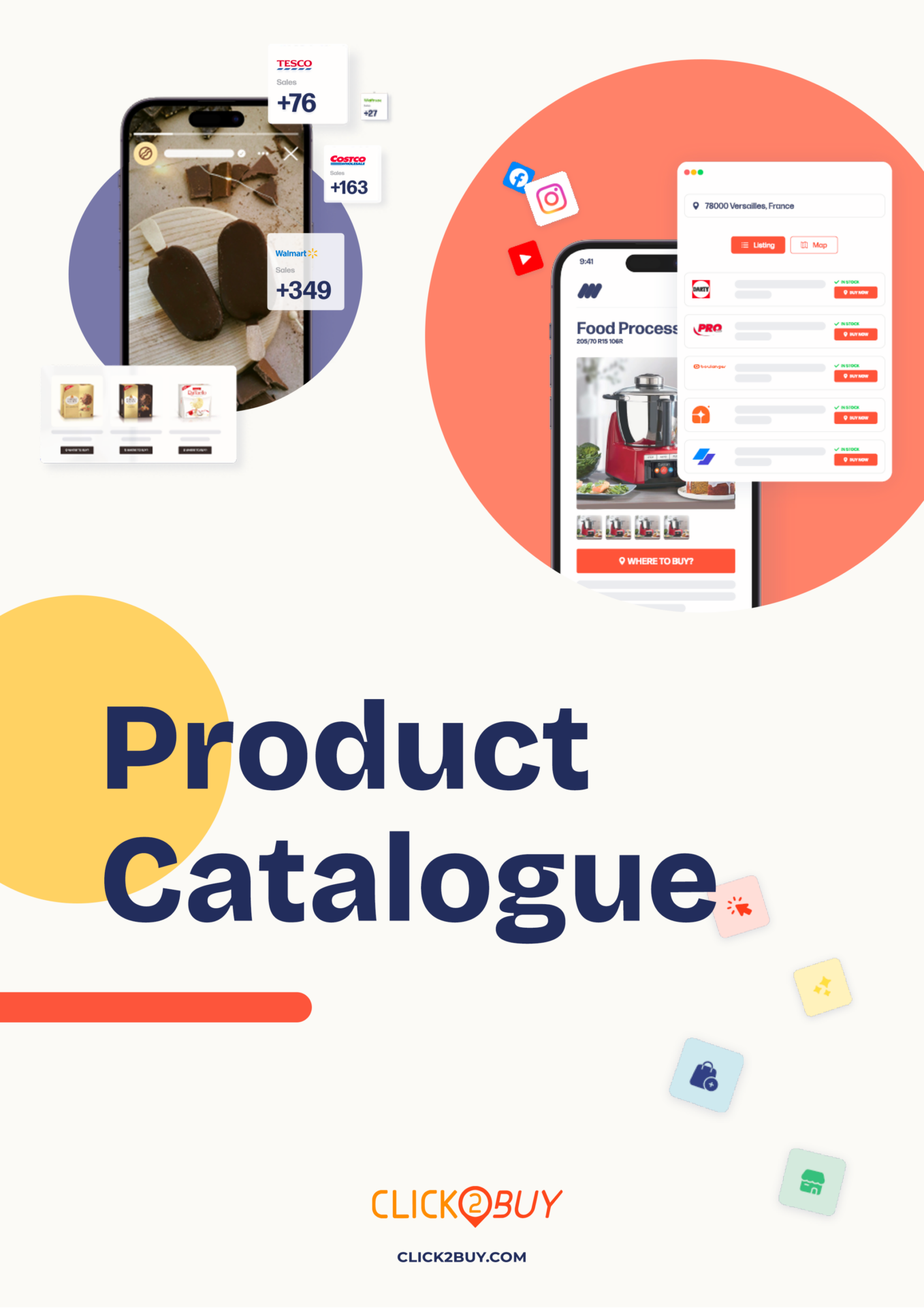
Click2Buy positions itself more as an omnichannel retail solution for brands selling through indirect distribution. The platform connects digital touchpoints with online and physical distributors while returning actionable data: products viewed, selected distributors, campaigns generating intent, and performance by channel or market.
This type of reading prevents drive-to-store from being treated as a simple exit mechanism. This comparison also illustrates why connecting media with retail requires more than a basic redirection tool.
The criteria to compare before choosing
The right approach is not to ask which platform is universally better. The right question is which one best fits your context. A single-country brand running a few occasional campaigns does not have the same needs as a European brand managing several ranges, retailers and local teams.
- Retailer coverage: does the platform connect the right distributors for your key markets?
- Redirection quality: do the links lead to the correct products rather than generic pages?
- Product availability: does the solution help avoid sending traffic toward a dead end?
- Analytics: does the reported data support performance management?
- Support: does the provider help optimize performance over time or only support deployment?
These criteria are highly practical. They help brands move beyond a superficial comparison between two platforms and return to the real subject: drive-to-store performance.
| Criterion | Question to ask | Why it is decisive |
|---|---|---|
| User journey | Can consumers quickly find where to buy? | An overly long journey damages intent |
| Retailer network | Are the displayed distributors genuinely relevant? | Retailer relevance varies between markets |
| Available data | Which signals are reported to the teams? | Without data, management remains limited |
| Media activation | Can the platform be integrated into campaigns? | Drive-to-store should work beyond the brand website |
| Continuous optimization | Can the setup be improved over time? | A good tool should evolve with brand use cases |
Why measurement changes everything
The real turning point is measurement. A platform can generate clicks without helping teams understand the value of those clicks. Brands no longer only want to know whether consumers leave for a retailer. They want to know whether the exit is useful, whether it matches the right product, whether it comes from a high-performing campaign and whether it reveals actionable purchase intent.
This is precisely where data becomes critical. Marketing teams need indicators to justify their budgets. Brand Managers want to understand which products genuinely attract shoppers. Retail Managers want to identify the partners that capture demand. Without this reading, indirect sales measurement remains too vague.
Intent-focused where-to-buy KPIs make it possible to move beyond a reading centered only on outbound clicks. This point is particularly important when comparing simple activation with genuine performance management.
When Click2Buy becomes more suitable
Click2Buy becomes particularly relevant when the brand wants to manage the entire journey rather than only activate a format. This applies when it wants to turn product pages, campaigns, newsletters or media assets into measurable entry points toward retailers.
The platform also supports a stronger relationship with distributors. By highlighting partners directly across brand assets, it provides them with qualified and measurable traffic. For sales teams, this is a practical argument. For marketing teams, it connects visibility with performance. For digital teams, it makes the journey smoother.
This broader approach becomes especially relevant when brands want to combine campaign activation with retailer guidance and intent measurement. This example provides another useful perspective on the difference between activating a format and managing the complete retail journey.
What we recommend in practice
If your main objective is a one-off activation, compare solutions based on deployment speed, media integration and journey simplicity. If your objective is more comprehensive management, focus primarily on data quality, retailer coverage, multi-country capabilities, product availability and support.
The choice between Swaven and Click2Buy should therefore not be treated as a direct opposition. It should be treated as a stack decision. Which layer are you currently missing? Shoppable activation? More reliable redirection? A better reading of intent? More actionable measurement? Stronger orchestration between the brand and its distributors?
The truth is simple. A modern drive-to-store platform should no longer only send traffic. It should help the brand understand that traffic, guide it correctly and optimize it over time. This is where the difference between a redirection tool and a genuine where-to-buy platform becomes very clear.
Why compare Swaven and Click2Buy?
Both solutions help brands connect their digital assets with retailers, but they use different approaches and provide different levels of performance management.
How should brands choose between Swaven and Click2Buy for drive-to-store?
By reviewing their priorities: shoppable activation, retailer coverage, product availability, intent measurement, support and multi-country management.
How many criteria should be reviewed before choosing?
Five are enough to begin: user journey, data quality, retailer network, analytics and the ability to optimize performance over time.
11 reviews

Maxence Antao, Communications Officer at Click2Buy
Our role at Click2Buy is to guide our clients throughout the buying journey and optimize their marketing ROI using real-time retailer stock data.