
Platforms like PriceSpider, MikMak and ChannelSight have played a major role in structuring the where-to-buy market. They helped brands connect their websites, campaigns and distributors, send traffic to retailers and better understand part of the buying journey. So the point is not to say that these solutions are no longer useful. That would be wrong. The more interesting point is that CPG brand expectations have changed. Today, displaying links or measuring click-outs is no longer enough. Marketing, retail and e-commerce teams want to understand what really happens after intent.
Field feedback
Legacy platforms remain useful for guiding users toward distributors. But brands now expect more: better retailer data, multi-country management, ROI measurement, intent reading, availability tracking and concrete recommendations. That is where some limits start to appear.
On the ground, the problem often comes back in the same form. A brand already has a where-to-buy platform. The button works. Retailers are displayed. Outgoing clicks are tracked. Yet teams do not always know which distributors really perform, which products trigger strong intent, which campaigns create value, or where the journey drops. In other words, the solution is in place, but the business reading remains partial.
Click-out no longer tells the whole story
The first limitation is dependence on click-out. For a long time, this KPI was treated as the main proof of performance. It is useful. But it remains incomplete. A click toward a retailer does not say whether the product is available, whether the price is consistent, whether the landing page is good, or whether the consumer is truly close to purchase.
This is where many brands start looking for alternatives to PriceSpider, comparisons with MikMak, or opinions on ChannelSight. Not necessarily because these solutions are bad. Rather because the market now expects a more precise measurement of performance. The question is no longer only how many clicks. The question becomes: what real intent do these clicks reveal?
On this point, this kind of reading becomes much more useful than reporting focused only on exit volume.
Retailer data is becoming the real battlefield
The second frequent limitation is the quality and use of retailer data. A where-to-buy solution is not only valuable because of its interface. It is valuable because of the quality of what it captures, normalizes and returns. Available products, activated distributors, observed prices, landing pages, out-of-stocks and market differences: without this data, the setup quickly remains superficial.
In many organizations, marketing teams want to prove the impact of their campaigns. Brand Managers want to understand whether their products are properly represented. Retail Managers want to know which partners deserve more attention. If the platform does not provide this reading, it becomes an execution tool, not a management tool.
This is exactly why this issue is becoming strategic for CPG brands.
Multi-country deployment quickly complicates legacy platforms
The third topic is omnichannel and multi-country management. A European CPG brand does not sell in one uniform market. Retailers change from one country to another. Catalogues are not always identical. Local rules vary. Buying behaviors vary too. A setup that works well in one country can become harder to read when deployed across ten or fifteen markets.
This is often where the limits appear: reporting becomes difficult to compare, data quality varies, local adaptation is either too rigid or too scattered. A strong CPG where-to-buy solution must therefore do more than display points of purchase. It must help manage different journeys while keeping a common reading of performance.
| What brands now need | Common limitation | What to aim for |
|---|---|---|
| Measure ROI | Reading too focused on click-out | Intent measurement and business contribution |
| Manage retailers | Partial distributor data | Clear view by retailer, product and market |
| Deploy across Europe | Difficult multi-country comparison | Global foundation with local adaptation |
| Optimize campaigns | Incomplete marketing attribution | Link between media, intent and indirect sales |
ROI is becoming harder to defend
The fourth limitation is proof of value. CMOs no longer only want to know whether a button is used. They want to know whether the setup helps convert better, guide demand better and justify budgets better. This is where the idea of where-to-buy ROI becomes central.
A platform that does not return enough actionable insights forces teams to complete the picture with other tools, exports and manual reprocessing. The risk is simple: where-to-buy remains visible in the journey, but invisible in decision-making.
For brands working through indirect distribution, this is a real problem. If they do not sell direct, they precisely need a better reading of their measurable indirect sales. This is also why this approach is becoming much more concrete.
What a modern platform needs to do better
Legacy solutions laid the foundations. But a modern platform needs to go further. It must help brands understand what happens between the product page, the campaign, the retailer and purchase intent. It must also make that reading usable for marketing, sales and retail teams.
- Return more than outgoing clicks
- Identify the retailers that truly capture intent
- Track performance by product, market and campaign
- Measure availability and journey breakpoints
- Help teams make concrete decisions
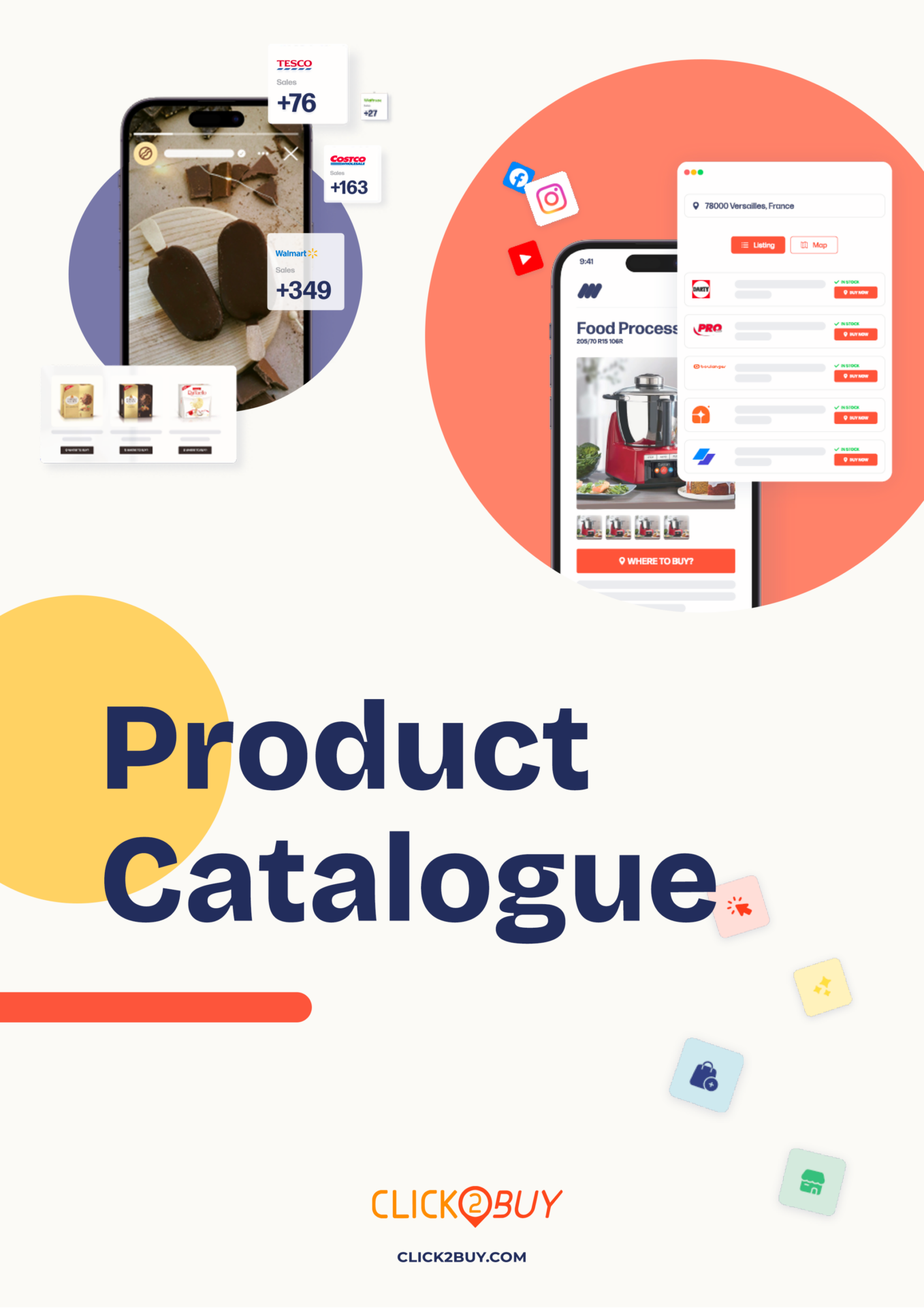
In this logic, Click2Buy fits into a more management-oriented approach. The platform is not limited to redirecting traffic. It aims to show where intent goes, which products perform, which distributors capture demand and how campaigns influence the journey. This is less about outgoing links and more about retail analytics and omnichannel orchestration.
The nuance matters. PriceSpider, MikMak and ChannelSight remain market references. But CPG brands no longer evaluate a where-to-buy platform only on its ability to display retailers. They evaluate it on its ability to prove performance, enrich the retailer relationship and turn data into decisions. That is where the market is moving today. This article also asks the right questions when comparing where-to-buy solutions.
Why do some brands leave certain where-to-buy platforms?
Because many now want more than click-out: real measurement, retailer data, omnichannel management and concrete marketing ROI.
How can you know if your where-to-buy solution has become limited?
If you cannot clearly see which products, retailers or campaigns generate real purchase intent, that is often a signal.
How much data should a where-to-buy platform return?
More than a simple click rate. A good solution helps understand the journey, performing retailers and real buying signals.
20 reviews

Maxence Antao, Communications Officer at Click2Buy
Our role at Click2Buy is to guide our clients throughout the buying journey and optimize their marketing ROI using real-time retailer stock data.