Changing your shopper stack is never trivial. A solution like SmartCommerce can answer a specific need very well: shortening the path between content, a campaign or a product page and a retailer basket. But not all brands have the same problem. Some are looking for a click-to-cart solution. Others want a shoppable media platform. Others mainly need a more complete where-to-buy, able to measure intent, guide users toward the right distributors and return usable data. This is where the topic of SmartCommerce alternatives becomes interesting.
The key point
Do not only look for an alternative to SmartCommerce. Look for the component your stack is really missing: media activation, click-to-cart, where-to-buy, product availability, analytics or indirect sales management.
On the ground, the trigger is often the same. The brand activates campaigns, generates traffic, pushes products, but loses visibility as soon as the consumer leaves its ecosystem. The click exists. The retailer basket sometimes exists. But the brand does not always know which product truly triggered the action, which distributor captured demand, which campaign created intent, or where the journey broke. This is where a stack that is too focused on the basket can show its limits.
Why look for an alternative to SmartCommerce
SmartCommerce is often associated with direct-to-cart, click-to-cart and short journeys toward retailers. This is relevant when the main goal is to move the user from content to a shopping basket. For some brands, especially on highly transactional activations, this logic can be enough.
But a CPG brand selling through several distributors, several markets and several channels often needs more. It needs to manage availability, redirection quality, retailer comparison, product data, campaign performance and purchase intent analysis. In that case, replacing SmartCommerce does not mean finding a clone. It means choosing a platform that better fits the brand maturity level.
The real question is not which solution also does basket activation. The real question is which solution really helps manage indirect purchase.
The main solution families to compare
Before choosing, you need to clarify the type of tool you actually need. Not all alternatives answer the same use case.
- Click-to-cart solutions: useful to quickly send a product to a compatible retailer basket.
- Shoppable media platforms: relevant to make a campaign, banner or content directly actionable.
- Where-to-buy solutions: adapted to guide users toward several online or physical distributors.
- Analytics platforms: useful to measure intent, selected retailers, performing products and effective campaigns.
- Commerce media solutions: interesting when the brand wants to connect media, retail, content and performance in a broader logic.
The trap is classic: choosing a solution that is very strong on activation when the real problem is measurement. Or choosing a redirection component when the issue comes from retailer coverage. A good shopper stack starts with a simple diagnosis, not with a seductive demo.
What to compare concretely
A serious comparison should not stop at the buy button. The button is visible. The real topic is behind it: data, availability, tracking, retailer quality and optimization capability. A commerce media platform or where-to-buy solution should help teams understand what works, not only generate an exit.
| Need | Solution to consider | Decisive question |
|---|---|---|
| Add to basket | Click-to-cart | Are the key retailers compatible? |
| Make a campaign shoppable | Shoppable media | Does the journey remain consistent after the click? |
| Guide users toward several distributors | Where-to-buy | Are the displayed options truly relevant? |
| Measure performance | Where-to-buy analytics | Does the data help teams act? |
| Manage indirect sales | Omnichannel solution | Are media, product and retailer connected? |
When click-to-cart is enough
A direct-to-cart alternative can be enough if your priority is highly transactional: pushing a specific product toward a retailer basket from a campaign or content that is already very close to purchase. In that case, journey speed is central.
But this logic quickly becomes limited if the consumer wants to choose their retailer, check availability, compare options or buy in store. The basket is not always the best exit point. Sometimes, the right journey is to offer several buying options and let the user choose the most relevant distributor.
This is where this kind of setup becomes more robust than a simple add-to-basket mechanism.
When where-to-buy becomes more relevant
A where-to-buy solution becomes more relevant as soon as the brand has to manage several retailers, several markets or several buying channels. It does not force a single path. It organizes available buying options and turns the brand digital touchpoints into entry points toward distributors.
For a brand selling through indirect distribution, this is often more realistic. Not all consumers want to buy in the same place. Some prefer a marketplace. Others prefer a local retailer. Others prefer a physical store. Others prefer a distributor they already use. The role of the brand is then to guide properly, not to impose a single basket.
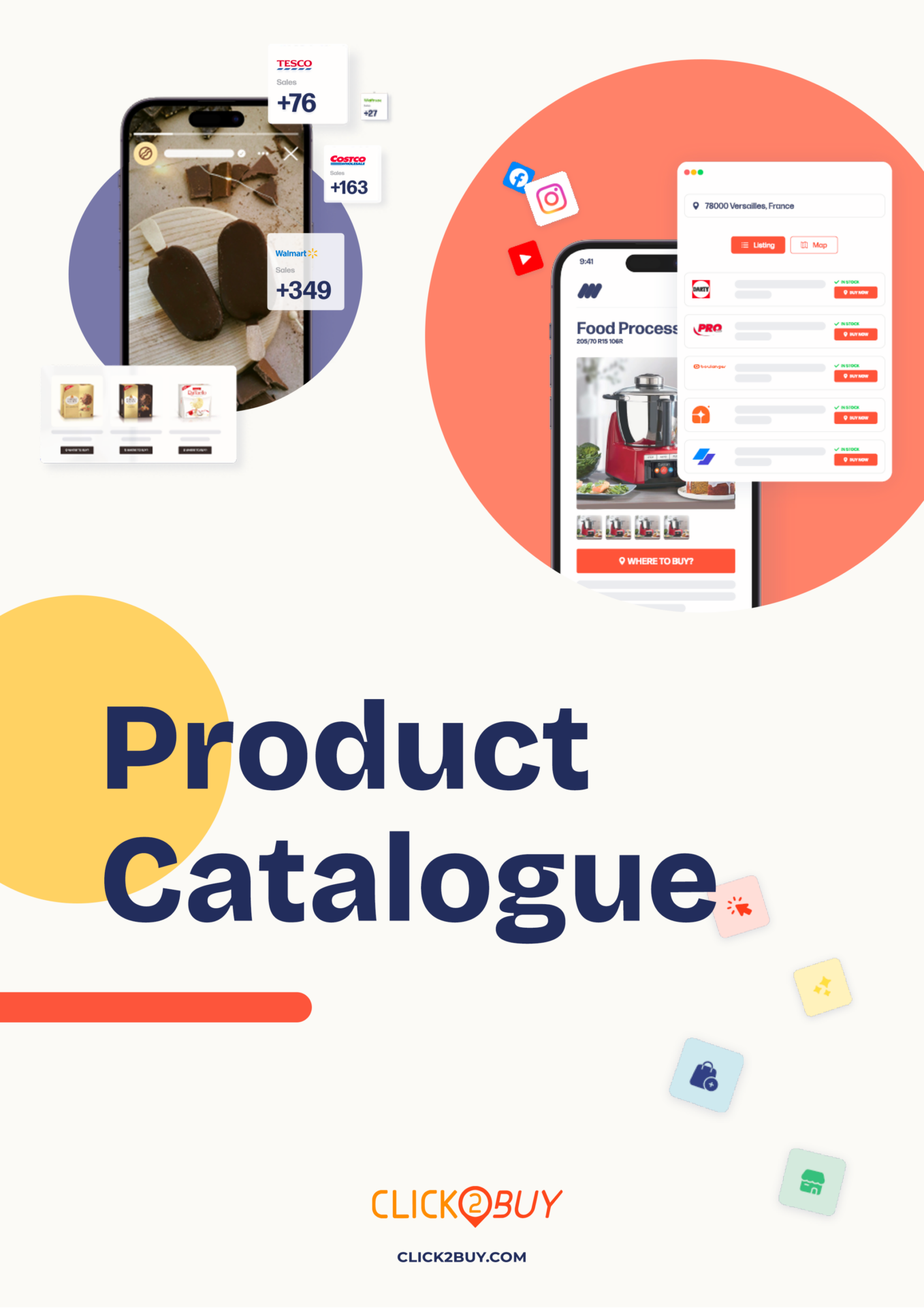
Click2Buy fits into this logic. The platform connects campaigns, newsletters, product pages and digital touchpoints to relevant retailers, while returning signals on products, distributors, channels and intent.
Why measurement changes the choice
The real difference between a limited shopper stack and a useful stack appears in analytics. If you only know that a user clicked, you have information. If you know which product they viewed, which retailer they selected, which campaign brought them, in which country, with which availability, you have a management tool.
This is what makes it possible to move from digital retail activation to a logic of indirect sales measurement. Marketing teams can defend their budgets. Brand Managers can prioritize products that trigger intent. Retail Managers can identify the distributors that truly capture demand.
On this point, this article becomes a useful reference when evaluating what data should come back after the click.
What we recommend in practice
Before choosing a SmartCommerce alternative, start by naming the problem. If your problem is basket activation, look at click-to-cart solutions. If your problem is campaign activation, look at shoppable media. If your problem is distributor coverage, look at where-to-buy. If your problem is ROI, look at analytics depth.
- Test the coverage of your priority retailers
- Check the quality of product redirections
- Look at the data available after the click
- Control how out-of-stocks and alternatives are managed
- Assess the support provided for continuous optimization
The best alternative to SmartCommerce is not necessarily the one that promises the shortest path to the basket. It is the one that helps you connect the right touchpoints to the right retailers, with the right data, and understand what truly creates performance. This point matters even more when retailer data becomes central to the buying journey.
Why look for an alternative to SmartCommerce?
Because a brand may need to go beyond the basket: availability, retailer choice, intent measurement and omnichannel management.
How should brands choose the right SmartCommerce alternative?
By starting from the real need: click-to-cart, shoppable media, where-to-buy, retail analytics or multi-country orchestration.
How many criteria should be compared before changing stack?
Five are enough to frame the choice: activation, retailer coverage, redirection quality, returned data and optimization capability.
24 reviews

Maxence Antao, Communications Officer at Click2Buy
Our role at Click2Buy is to guide our clients throughout the buying journey and optimize their marketing ROI using real-time retailer stock data.