Comparing Wayvia and Click2Buy makes sense if we are talking about the connection between media and retail. Both solutions operate in a similar space: they aim to turn digital touchpoints into measurable actions toward distributors. But they should not be put in the same category too quickly. Wayvia is often associated with a shoppable media platform logic, retail intelligence and media activation toward commerce. Click2Buy focuses more on where-to-buy, redirection to retailers, product availability and purchase intent measurement. The right choice therefore depends less on the name of the solution than on the business problem you need to solve.
Good practice
Compare Wayvia and Click2Buy based on the moment in the journey you want to control better: media activation, redirection to retailers, product availability, intent measurement or omnichannel management.
What to avoid
Choosing a solution only because it promises to connect media and retail. The real question is: what do you see, what do you measure, and what can you optimize after the click?
On the ground, many CPG brands face the same issue. They invest in media campaigns, retail media activations, social content, newsletters or product pages. These touchpoints generate attention. But attention is not worth much if it is not properly connected to a point of purchase. This is precisely the role of a CPG media-to-retail logic: reducing the gap between exposure and potential purchase.
What Wayvia brings to the media retail logic
Wayvia answers a very current logic: making media more transactional and better connecting marketing investments to retail signals. For a brand that wants to activate shoppable formats, connect campaigns to distributors and make better use of shopper data, this approach can be relevant.
The strength of this type of solution is clear: it often starts from media activation. An ad, a piece of content or a digital setup can become a shorter path toward the retailer. In a context where marketing budgets are closely scrutinized, this approach speaks to CMOs. It helps move away from a purely branding logic and brings media closer to performance.
But this positioning also raises a question: how far does the platform go in managing the journey after the click? This is where the comparison with Click2Buy becomes interesting.
What Click2Buy brings on the where-to-buy side
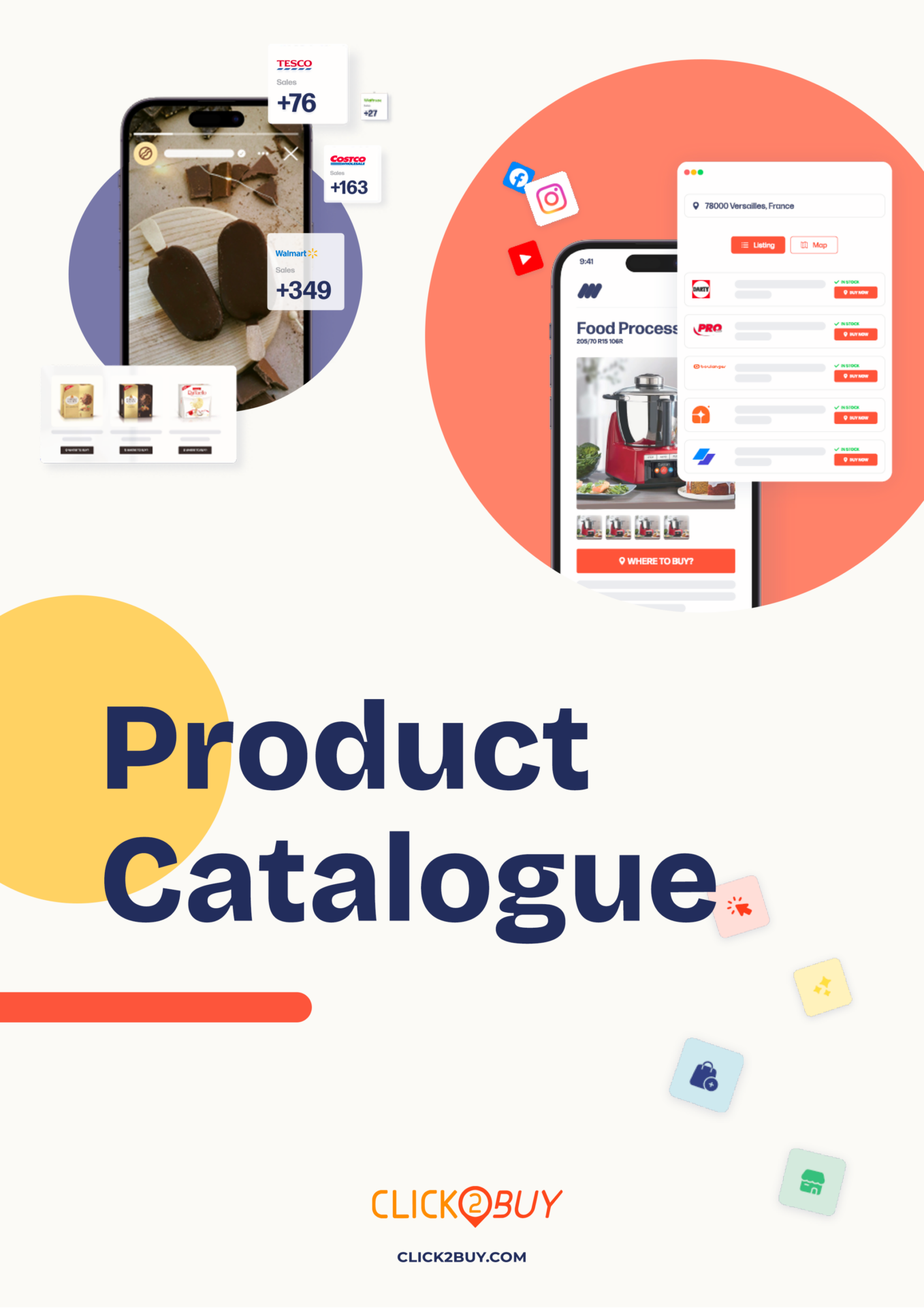
Click2Buy operates on a very concrete layer of the journey: the moment when the consumer is looking for where to buy. The platform connects the brand digital touchpoints to the most relevant distributors, online or physical, with measurement behind it.
The point is not only to display retailers. The point is to know which products generate intent, which distributors capture that intent, which marketing channels trigger action, and where the journey drops. This is what makes the difference between simple redirection and a truly manageable where-to-buy journey. This approach helps frame that distinction more clearly.
For a brand selling through indirect distribution, this layer is particularly important. It does not always control the final sale. It therefore needs reliable intermediary signals to understand whether its campaigns, content and product pages actually create purchase intent.
The real difference: media activation or journey orchestration
The Wayvia Click2Buy difference should not be caricatured. Both approaches can overlap. But their starting point is not always the same. Wayvia speaks more to brands that want to strongly connect their media to purchase. Click2Buy speaks more to brands that want to structure their where-to-buy journey over time, with management of retailers, products, campaigns and intent data.
In short: if your priority is to make your media formats more shoppable, a solution strongly focused on media activation may answer the need. If your priority is to turn your whole digital ecosystem into a measurable indirect sales lever, you need to look at the depth of the where-to-buy, the quality of returned data and long-term support.
| Criterion | Wayvia | Click2Buy |
|---|---|---|
| Starting point | Media activation and shoppable media | Where-to-buy journey and purchase intent |
| Main use | Connect campaigns and commerce | Guide users toward the right retailers and measure the journey |
| Business reading | Media performance and retail intelligence | Products, retailers, campaigns, intent and availability |
| Best suited need | Making media activations more transactional | Managing an omnichannel journey toward distributors |
Why measurement after the click changes everything
The real topic in a retail media performance strategy is not only the click. It is what the click becomes. Does it open a real retailer choice? Does it lead to the right product? Does it reveal strong intent? Does it help understand which distributor captures demand? Does it help optimize the next campaign?
Many setups still rely on a reading that is too simple: impressions, clicks, exits. Useful, but insufficient. For a CPG brand, teams need to go further. They need usable data, not only activity reporting. They need to connect media, product, retailer and intent.
This is exactly why this kind of data becomes essential. It helps read what happens between marketing exposure and indirect sales.
When Wayvia can be the right choice
Wayvia can be relevant if your main need is to activate shoppable campaigns, bring media closer to retailer conversion, or work with a more integrated logic between media, commerce and shopper data. For some brands, especially those with strong media maturity and many activations, this type of approach can make sense.
The right reflex is then to check three points: the quality of media integrations, the depth of retailer data returned, and the ability to turn that data into concrete actions. A media retail solution should avoid becoming only an activation layer. It should also help teams learn.
This is also why shoppable media must always be considered with the buying journey behind it, not as a simple interactive format.
When Click2Buy becomes more suitable
Click2Buy becomes more suitable when the brand wants to keep a complete view of the where-to-buy journey. Brand website, campaigns, newsletters, social media, landing pages, product pages: each touchpoint can become a measurable entry point toward distributors.
The platform is especially useful for brands that want to connect marketing, retail and digital without losing data along the way. It helps understand where traffic goes, which products perform, which retailers are selected and which marketing channels truly trigger intent. This is what allows teams to move from visibility marketing to more ROI-driven marketing.
On this point, retailer data quality becomes a decisive criterion when choosing a solution.
What we recommend in practice
Before choosing between Wayvia and Click2Buy, clarify your main problem. If you mostly want to make your media more transactional, look at shoppable media depth. If you want to manage your buying journey across all your digital touchpoints, look at where-to-buy quality. If you want to defend your budgets, focus above all on the platform ability to return actionable data.
- For media campaign activation: look at the fluidity between creative, click and retailer
- For distributor management: look at coverage, availability and redirection quality
- For performance measurement: look at intent data and analytics
- For long-term deployment: look at support and multi-channel capacity
The truth is simple. Connecting media and retail is no longer enough if the brand does not understand what happens after the click. A modern platform must help activate, but also read, compare and optimize. Wayvia and Click2Buy answer similar logics, but not exactly the same need. The right choice depends on the level of control you want to keep over purchase intent, retailer data and the real performance of the journey.
Why compare Wayvia and Click2Buy?
Because both solutions connect digital touchpoints to retailers, but Wayvia puts strong emphasis on shoppable media, omnicommerce data and retail intelligence, while Click2Buy focuses on the where-to-buy journey and intent measurement.
How should brands choose between Wayvia and Click2Buy?
If the priority is connecting media, shopper data and retail intelligence, Wayvia can be relevant. If the priority is guiding traffic toward the right distributors and measuring purchase intent, Click2Buy is more targeted.
How many criteria should be analyzed before choosing?
Five are enough to start: media activation, retailer coverage, product availability, analytics and the ability to turn intent into measurable action.
14 reviews

Maxence Antao, Communications Officer at Click2Buy
Our role at Click2Buy is to guide our clients throughout the buying journey and optimize their marketing ROI using real-time retailer stock data.