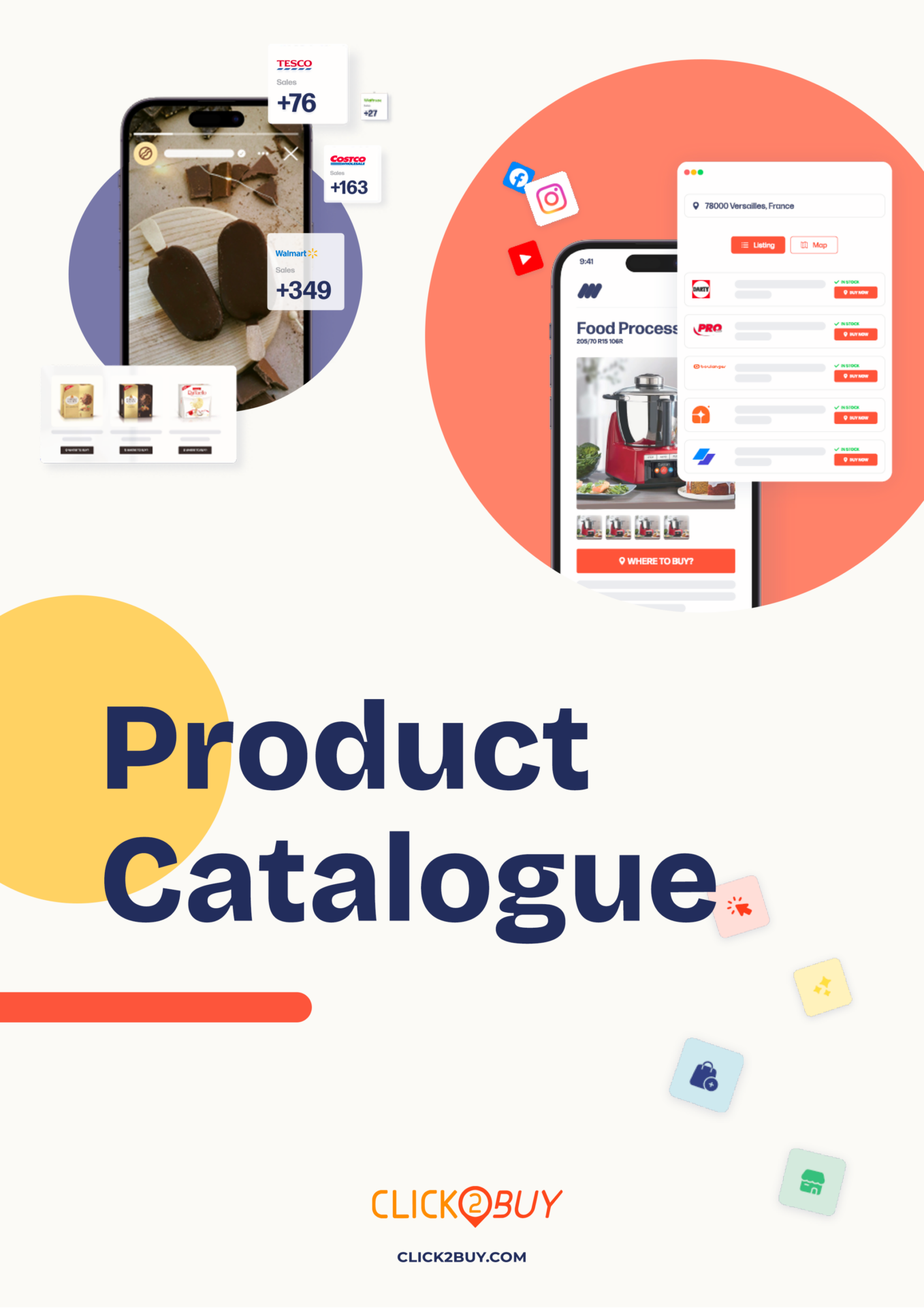

A CPG product launch can look very successful on paper and still miss the essential part the very next day. The campaign goes live. Traffic arrives. Teams are aligned. Distributors have been contacted. And yet, the buying journey breaks. Product not found. Poor redirection. Missing retailers. Incomplete data. The problem is not the launch itself. The problem is what happens immediately after. If your where to buy is not operational from day one, you lose part of the demand when it is at its hottest.
The point to lock before launch day
A launch should not only create attention. It should turn that attention into a clear buying path. If consumers do not know where to buy, who to buy from, or if they land on an unavailable product, your marketing launch is working for nothing.
On the ground, the issue comes back often. Marketing thinks visibility. Sales thinks listing. Digital thinks go-live. Everyone does their part. But few teams really manage the full experience between the moment the product is announced and the moment the user tries to buy it. This is where a well-prepared where to buy strategy changes everything. It is not just there to display distributors. It is there to prevent a promising launch from becoming a broken journey.
Why so many launches lose traffic in the first days
The first problem is the go-live illusion. Many brands consider the launch ready as soon as the product page is live and the campaign starts. In reality, that is only the beginning. An operational where to buy means that the product is properly connected to distributors, that the right references appear, that variants are understood, and that consumers can move from interest to action without unnecessary friction.
The second problem is data quality. If the product is not properly mapped, if retailer feeds are incomplete, or if availability is unreliable, the launch can degrade very quickly. This is exactly why this issue should be treated as a performance topic, not only as a technical one.
The third problem is the lack of real testing. Too many launches are validated internally without checking what the user actually sees. But a CPG product buying journey must be judged from the user side, not from the project team side.
The checklist to complete before day one
The good news is that you do not need fifty prerequisites. You mainly need to lock the right ones. Here is the checklist that really matters for a product launch in indirect distribution with a where to buy ready from the very next day.
- The product is properly created with the right reference, the right name and the right variant
- Priority distributors are properly connected to the product
- Redirections work on desktop and mobile
- Destination product pages are consistent with the launch promise
- Availability is checked across key retailers
- Campaign visuals and content match the product that can actually be found
- The where to buy is integrated on the product page, but also on the right campaign touchpoints
- Exit and intent KPIs are tracked from day one
- A fallback plan exists if a retailer is not ready or if stock drops
- Marketing, sales and retail teams know who decides if a problem appears
This logic changes the nature of the launch. We are no longer talking only about a new CPG retail product being promoted. We are talking about a product that is actionable, findable and measurable. This is also why this kind of setup should not be treated as a layer added at the end, but as part of the go-to-market structure.
What to test before launch
Testing is not a formality. It is often what prevents the most expensive mistakes. Before launch, you need to simulate the real journey: click from a campaign, land on the right page, open the where to buy, see the right distributors, test exits, check variants and confirm landing pages.
You also need to test imperfect cases. What happens if a distributor is empty? If the product is not live yet at a key partner? If a URL changes? If the retailer page displays the wrong variant? A strong omnichannel CPG launch does not only plan for the ideal scenario. It plans for possible breakage.
| Point to check | Why it is critical | Risk if forgotten |
|---|---|---|
| Product mapping | Ensures the right product appears at the right retailer | Wrong reference displayed |
| Availability | Avoids sending users to a dead end | Traffic lost from day one |
| Redirections | Guarantees a smooth journey | Buying journey breakage |
| Campaign and product consistency | Maintains the promise between message and purchase | Confusion and lower conversion |
| Launch KPIs | Allows teams to correct quickly | Issue detected too late |
What to track from day one
A launch where everything seems to go well can still hide problems. This is why teams need to read the right signals very quickly. Not only traffic or click-through rate. You need to look at exits toward distributors, most viewed products, most selected retailers, breakpoints and gaps between the media promise and real execution.
This is where many brands miss the real issue. They measure the campaign. They measure much less what it actually triggers in the buying journey. A successful launch is not only a spike in attention. It is a spike in attention with a clear exit. These signals are exactly what makes that shift visible.
The real discipline behind a clean launch
In this logic, Click2Buy illustrates very well what should be expected from a setup that is ready from day one. Not a simple widget added to a product page. A layer that connects marketing touchpoints to relevant distributors, with usable data behind it. This is what allows marketing teams to avoid launching into the void, sales teams to see which partners perform, and retail teams to quickly identify gaps in the journey.
The position is simple. A CPG product launch should never be only visible. It must be buyable. If the product exists in the campaign but not in the journey, the launch is incomplete. If the product exists in the journey but not at the right retailers, it is poorly prepared. And if nothing is measured from day one, it becomes impossible to correct in time. That is why a serious CPG go-to-market checklist starts less with creative work than with execution.
Why prepare the where to buy before launching a CPG product?
Because a strong launch without a clear buying journey lets part of the demand disappear.
How can a where to buy be operational from day one?
By preparing product data, distributors, redirections and tests before go-live.
How many elements should really be checked before launch?
Around ten key points are often enough to avoid the mistakes that break conversion.
16 reviews

Maxence Antao, Communications Officer at Click2Buy
Our role at Click2Buy is to guide our clients throughout the buying journey and optimize their marketing ROI using real-time retailer stock data.