DTC means direct-to-consumer, meaning the brand sells directly to consumers through its own channels, without relying only on distributors or wholesalers. On paper, the model is attractive: more control, more margin, more data and a more direct relationship. Salesforce also reminds us that DTC allows brands to better control their image, customer experience and consumer insights. But in Europe, believing that DTC makes where-to-buy secondary is a classic mistake. In most cases, direct sales do not replace retail.
The key point
Selling direct does not mean capturing all demand. In Europe, a brand that cuts its where-to-buy because it has an e-commerce site often loses part of its coverage, measurement and influence with retailers.
On the ground, the issue is simple. DTC teams see the brand website as the center of the game. Retail teams know that, for many products and markets, the purchase will end elsewhere: marketplace, pure player, omnichannel retailer or local network. And they are often right. NielsenIQ highlights that in Europe, omnichannel retailers represented 56% of online revenue in consumer tech in the first half of 2025. This says something very simple: the European buying journey remains fragmented, and major retailers still carry huge weight in real conversion.
Why DTC does not replace retail
The first point is coverage. A brand website, even a strong one, does not cover every use case or every market. In Europe, buying behaviors remain highly fragmented depending on countries, categories and local habits. Some audiences want to buy directly from the brand. Others prefer a known retailer, a marketplace, a local player or a distributor they already use for other purchases. DTC can capture part of demand. It rarely captures all of it.
The second point is friction. A brand that pushes DTC too hard may think it is simplifying the journey. In reality, it can sometimes make it longer. If users mainly want to compare, check reviews, group their purchases or use a delivery option or retailer program they already know, the DTC site is not necessarily the most natural path. This is where omnichannel where-to-buy becomes valuable again: it allows the brand to keep control of guidance, even when the purchase does not happen on its own site.
Why where-to-buy remains strategic
The common reflex is to oppose DTC and retail. That is the wrong reading. The point is not to choose a side. The point is to know how the brand manages the transition between its own touchpoints and the places where the purchase actually happens. A good where-to-buy does not compete with DTC. It prevents DTC from becoming a dead end for all consumers who will not buy direct.
It is also a measurement issue. The DTC site gives you a detailed view of what happens there. But without a layer that guides users toward retailers, you lose part of the story: which products trigger strong purchase intent but end up elsewhere, which markets prefer third-party retailers, which distributors capture your demand, and which campaigns actually support sales outside your own basket. This is exactly why these signals become critical when direct sales only tell part of the performance story.
What DTC really brings, and what it does not cover
We need to be fair. DTC brings a lot. Control of the experience. Direct access to data. The ability to test an offer, a bundle or a message. Control of service and branding. But it does not automatically replace distribution density, coverage depth and retailer familiarity across Europe.
- DTC is strong for capturing relationships and first-party data
- Retail is strong for capturing broad demand already used to certain buying journeys
- Where-to-buy is strong for connecting both without breaking the experience
The real challenge is therefore management. A brand that sells direct but keeps a strong guidance setup toward retailers does not lose control. It expands it. It accepts that not all consumers buy in the same place, but it structures their exit instead of suffering from it.
| Channel | What it does well | What it does not cover alone |
|---|---|---|
| DTC | Direct relationship, brand experience, proprietary data | All use cases, all markets, all buying habits |
| Retail | Coverage, trust, comparison, volume | Direct brand control over the experience |
| Where-to-buy | Guidance, journey continuity, intent measurement | Does not replace the DTC offer or retail distribution |
What European brands need to arbitrate
In Europe, the right question is not should we push DTC or retail? The right question is: when does direct bring more value, and when should retailers play their role? Where-to-buy is precisely there to manage this arbitration. It allows the brand to keep a brand-led logic, even when the final basket is filled elsewhere.
This is where many teams get it wrong. They remove where-to-buy because they want to favor direct sales. In reality, they often lose clarity. They force users into one path when the market offers several. And they reduce their ability to read where-to-buy conversion in Europe in favor of a partial DTC reading. At this level, this approach becomes much more instructive than looking only at direct sales volume.
Why this also changes the retailer relationship
A brand that sells direct can quickly worry its network. That is a classic situation. But a well-designed where-to-buy can show that the brand website is not only there to divert demand toward DTC. It can also distribute, qualify and value demand toward partners depending on markets, ranges and availability. This completely changes the reading of the setup.
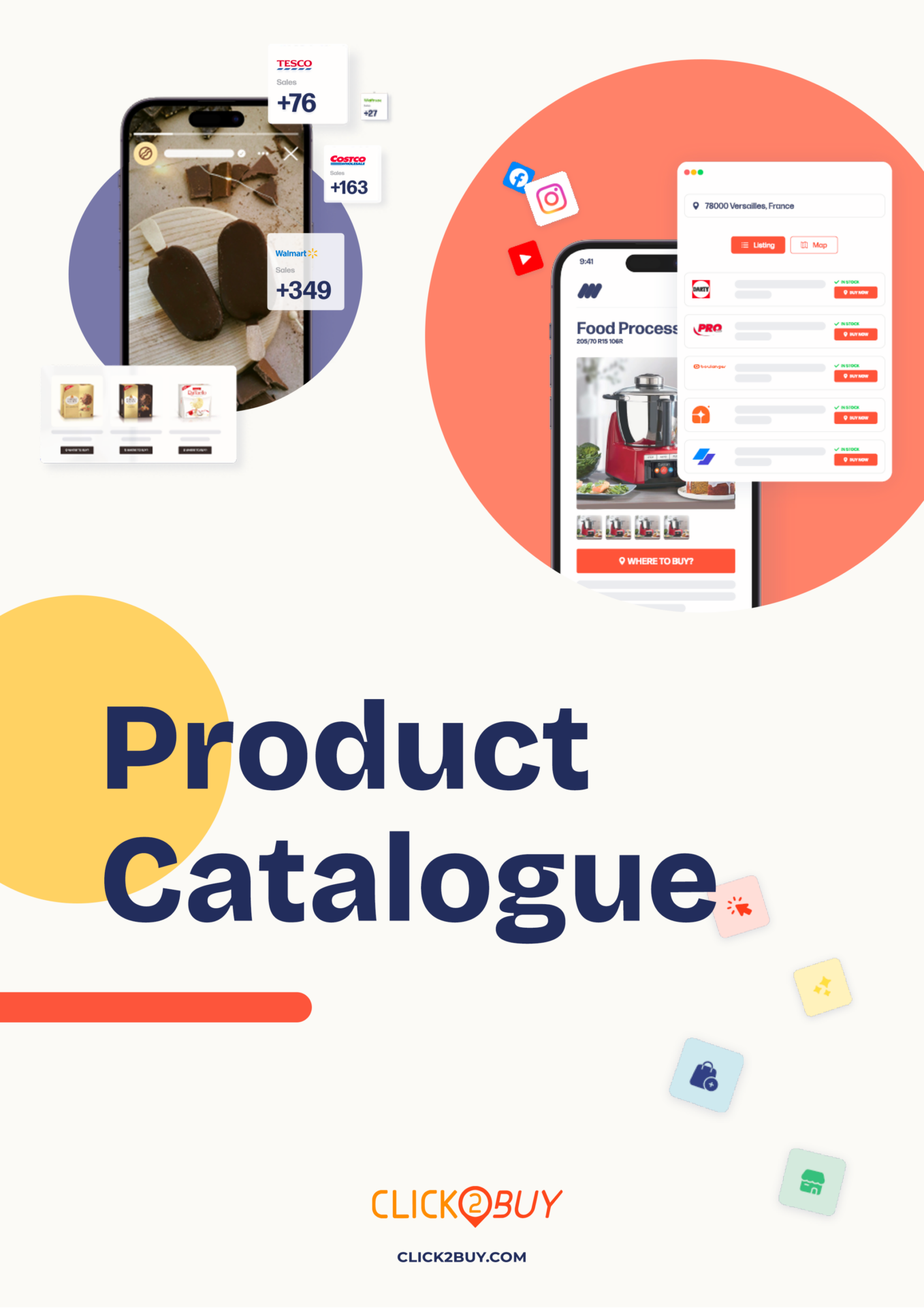
In this logic, Click2Buy illustrates a very concrete use case. The brand website, campaigns, newsletters or product pages do not only become direct sales levers. They also become measurable entry points toward retail partners. This is what makes it possible to preserve DTC logic where it makes sense, without cutting the link with retailers that remain decisive in real distribution. Where-to-buy then becomes an orchestration tool, not just a button.
What we recommend directly
If your brand already sells direct, keep three simple reflexes. First, never consider your DTC website as the only legitimate place to buy. Then, precisely map the markets and categories where retailers still dominate. Finally, treat where-to-buy as a management layer between your touchpoints and all channels able to convert.
- Keep an exit logic toward retailers when it better serves the use case
- Do not push DTC where the market clearly prefers a third-party partner
- Measure demand guided toward retailers, not only direct sales
- Work direct and retail as two complementary levers
The truth is simple. In Europe, DTC can strengthen a brand. It does not remove the need to control where-to-buy. Quite the opposite. The more a brand sells direct, the more it needs to know exactly when to keep users on its own site, and when to guide them intelligently toward a retailer. This point is what keeping control of the buying journey really means.
Why keep a where to buy if the brand already sells direct?
Because the DTC site does not cover all use cases, all markets or all buying moments.
How can brands connect DTC and retail without confusing the journey?
By letting each channel play its role, with a where-to-buy that guides users to the right point of sale depending on context.
How much can a brand gain by keeping this dual logic?
Often a lot in clarity, coverage and performance reading, especially in Europe where journeys remain highly fragmented.
12 reviews

Maxence Antao, Communications Officer at Click2Buy
Our role at Click2Buy is to guide our clients throughout the buying journey and optimize their marketing ROI using real-time retailer stock data.